Crazy Time Live Casino Game Show in the UK
 Available in GB
The guide separates Great Britain’s licensing test from the game’s format, betting choices, demo access and bonus terms.
Finding Crazy Time at a UK Casino: Check the Licence Before the Lobby
A casino lobby can make a game look like the main decision. With Crazy Time, the first decision is whether the operator is authorised to offer remote gambling to customers in Great Britain. A familiar title, polished live-casino page or reassuring badge does not answer that. I would check the operator’s regulatory status before considering its game catalogue.
The UK Gambling Commission regulates commercial gambling in Great Britain and issues operating licences to businesses. Remote operators serving people in Great Britain need the relevant Commission licence, even when the company or its equipment is based elsewhere. That is the practical test behind claims about a casino being “UK-facing”: the important point is not the wording on a homepage, but whether the business offering the gambling has the required authorisation.
The Gambling Act 2005 is the principal framework for gambling in England, Wales and Scotland; Northern Ireland is outside that Act. In Great Britain, online gambling is legal for adults aged eighteen and over when the operator holds a UK Gambling Commission licence. This is why a casino’s claimed location, a British-themed design or a sterling balance cannot stand in for a licence check.
Verify the operator, not just the game
Crazy Time may appear in the live-casino lobby of an operator that offers the game, but there is no dependable reason to assume that every casino carries it or that a lobby listing proves the operator is licensed. A game catalogue is a commercial choice: titles can be added, removed or presented differently across operators. I treat availability as something to confirm on the casino’s own current site, after checking who is responsible for the account.
That distinction matters because search results and comparison pages can make a casino look established before its legal identity has been checked. A brand name may differ from the company name shown in the terms, the payment page or the account correspondence. Those details should fit together. If the operator’s identity is hard to trace, or the licence information points to a different business without explaining the relationship, the lobby is not the place to resolve the uncertainty.
Deal or No Deal Casino UK: Slot Guide
The Commission’s public register is the place to check whether the business holds an operating licence. Search the register using the operator’s legal name and any relevant trading name, then compare the result with the company named on the casino site. Check the licence number against the register before depositing. A logo or a line saying “licensed” is only a claim until it matches the regulator’s record.
The register check is not a formality to do after creating an account. It helps establish which company is taking the deposit and is responsible for the gambling service. If the brand uses a different company name, the site should make that relationship clear in its terms and policies. A mismatch that cannot be explained is a reason to stop and investigate rather than assume the names are interchangeable.
A specialist review reported that its check of the Gambling Commission’s public register, dated 26 September 2026, did not identify a LuckyPays entry under the LuckyPays brand or the stated domain, including luckypays.io. That is a dated register observation, not a general statement about every casino or a permanent finding. Register records can change, so a live check matters. The useful lesson is narrower: verify the actual operator and its current status instead of relying on a brand’s own assurance.
What the licence check changes
A UKGC licence places a remote operator serving Great Britain within the local regulatory system. It is not a promise that every customer will like the service, nor does it certify that every game suits every budget. It does establish which regulator is responsible for commercial gambling in Great Britain and gives customers a formal route for complaints and oversight.
A licensed casino must provide an internal complaints process and access to an approved Alternative Dispute Resolution service. The operator should explain how to raise a complaint and what happens if it remains unresolved. This information belongs in the terms or help pages, not behind vague marketing language. I look for a named process and a clear route through it.
A licensed casino must provide an internal complaints process and access to an approved Alternative Dispute Resolution service, with clear instructions on how to raise a complaint.
Licensed operators must also provide safer-gambling tools, including self-exclusion. They are required to contribute to the Research, Education and Treatment levy. These are part of the regulated operating framework, rather than optional extras used to make a lobby appear responsible. A customer should be able to locate the controls and understand how the account tools work before relying on them.
A licence does not remove the need to read the operator’s own conditions. The account terms identify the company, explain how disputes are handled and set out what the operator says about deposits and withdrawals. Those pages should not contradict the identity shown in the regulator’s register. A sound check is a chain: brand, legal operator, register entry and account terms. If one link is missing, stop there.
Read the account safeguards before funding it
UK-licensed operators must verify a customer’s age before allowing a deposit. They must also prompt new customers to set a financial limit before their first deposit and provide accessible account-level controls for adjusting limits. These steps are not evidence that gambling is risk-free; they are safeguards intended to make the account’s money controls visible before play begins.
Payment rules are another quick test of whether a casino’s claims match the regulated market. Remote gambling operators cannot accept credit-card payments for gambling, including credit-card funds routed through a money service business. They also cannot accept wallet payments where the wallet allows credit-card funds to be used for gambling. A payment option that appears to bypass that restriction should not be treated as a harmless technical workaround.
Crash Casino Games in the UK: How They Work
I would inspect the cashier information, account controls and terms before funding an account. The wording should identify the available payment methods and explain the operator’s safeguards without suggesting that a prohibited credit-card route is acceptable. A payment logo by itself does not tell the whole story; the funding route and the operator’s rules matter.
The age check and financial-limit prompt are operational checkpoints, not decorative notices. If the site asks for a deposit before its required checks or does not provide the account controls it describes, that deserves attention before money is committed. Good presentation is not a substitute for a process that works.
Avoid treating a shortlist as a ranking
People looking for Crazy Time casinos in the UK may find lists that place brands in order, but an ordered list is not automatically evidence of quality, licensing or present-day availability. Casino rankings can reflect editorial choices, commercial arrangements or a snapshot of a lobby that has since changed. I would not treat a “top” label as proof that the operator is authorised or that Crazy Time is currently available there.
A more useful comparison starts with verifiable details: the licensed business name, its entry on the Commission register, the clarity of its terms, the account safeguards and whether the game appears in the operator’s own lobby. Only then does it make sense to compare practical features. The order matters. A game listing cannot repair an unclear operator identity.
The same caution applies to brand pages and advertisements. “Trusted” is a promotional word; it may mean little more than that the site wants to sound reassuring. What sits behind it should be visible: a current licence entry, a named operating company and workable customer-protection processes. If those details are absent, the adjective has done its job for the advertiser, not for the customer.
Verify the operator’s actual status on the UK Gambling Commission’s public register rather than relying on a brand’s own claims or promotional labels like "trusted."
No single lobby can be assumed to represent all Crazy Time online casinos, and there is no reason to present a definitive ranking without evidence that supports it. The game’s presence is a product detail. The operator’s authorisation is a regulatory question. Keeping those questions separate prevents a familiar title from lending credibility to a business that has not established its status.
A practical pre-deposit check
Before opening an account or depositing, I would work through the basics in this order:
- Identify the company responsible for the casino, including any legal name given in its terms.
- Search the UK Gambling Commission’s public register and verify the licence number against that business.
- Check that the casino’s brand, stated domain and legal operator make sense together.
- Find the complaints process, the approved ADR route and the self-exclusion information.
- Confirm that the age-verification and financial-limit steps appear before the first deposit.
- Read the cashier rules and avoid any credit-card route, including a wallet or intermediary that uses credit-card funds for gambling.
- Check the operator’s own lobby for Crazy Time rather than relying on an old listing elsewhere.
If a point cannot be reconciled, I would not treat uncertainty as a minor inconvenience. With gambling accounts, the identity of the business and the route for resolving a problem matter as much as the game on screen. A licensed operator is not necessarily the right choice for every person, but a claim without a verifiable register entry is not an adequate substitute.
The boundary is simple. First establish that the operator is authorised to serve Great Britain; then assess its account conditions and whether it offers the game. The steps are separate. A licence does not guarantee a particular title, and a title does not establish a licence.
I would also set a firm personal boundary before play: gamble only what can be afforded to lose. If that condition cannot be met, the sensible decision is not to deposit. No lobby, game title or promotional wording changes that calculation.
Crazy Time Online: The Live-Show Format and the Games Around It
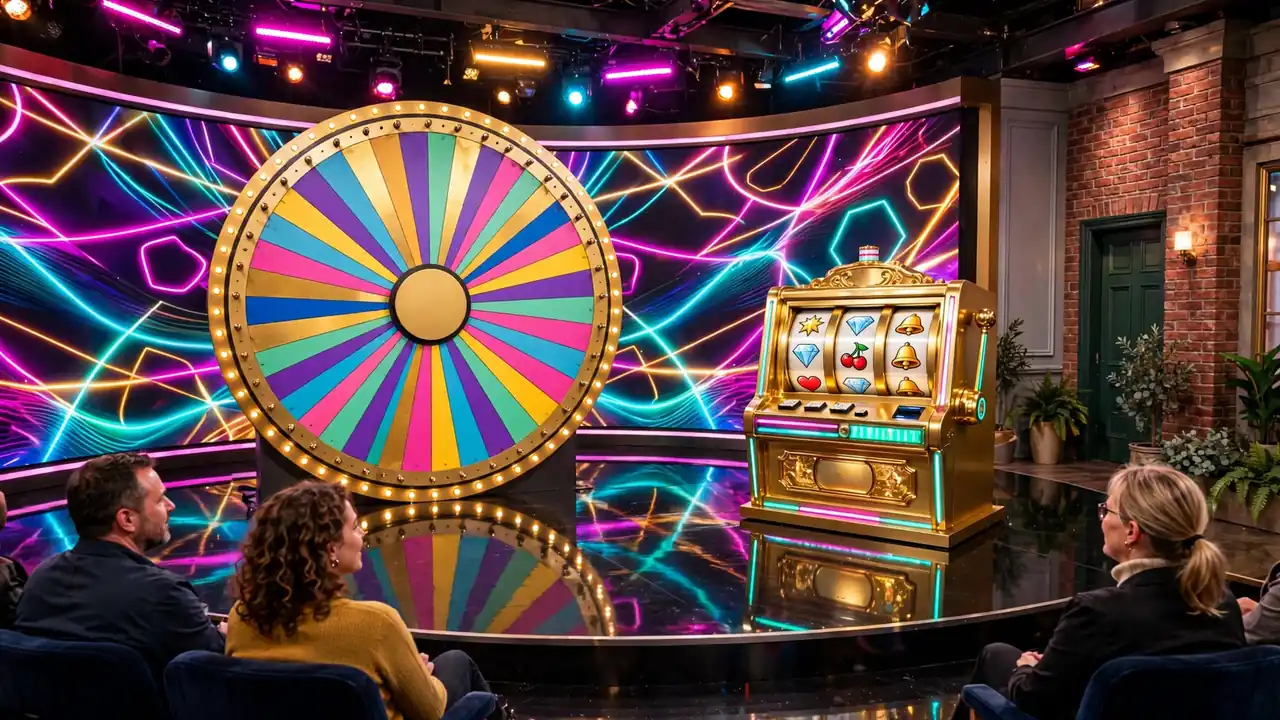
Crazy Time belongs to the live casino because its central appeal is a presented game, not a set of spinning reels. A studio host, a physical wheel and an on-screen interface give it the shape of a broadcast game show. The software still handles the betting interface and the settlement of wagers, but the visible event is staged in real time. That distinction matters: calling it a slot may be convenient shorthand, but it describes the wrong kind of experience.
I find it useful to separate the game’s presentation from its mechanics. The presentation supplies the room, host and sense of occasion; the underlying game supplies outcomes and payouts. A lively set does not make an outcome more predictable, and an animated interface does not turn a live game into a conventional slot. The show can make the experience feel more social or theatrical, but those impressions are not evidence about what will happen next.
A game show inside the live casino
A live casino is a broad category, not a single table format. It can include familiar card and wheel games shown through a studio feed, as well as titles built around a host-led show. Crazy Time sits in the latter group. Its layout and visual language borrow from television entertainment, while the casino interface lets players place wagers on the available outcomes.
Difference between Crazy Time and slots
A slot typically presents a self-contained sequence of reels and symbols on screen, whereas Crazy Time puts a physical wheel at the centre of the action and frames it as a live-show event with a host.
That mix explains why the title can look unlike a traditional casino game without being a slot. A slot typically presents a self-contained sequence of reels and symbols on screen. Crazy Time instead puts a physical feature at the centre of the action and frames it as an event to watch. The screen may still include buttons, betting areas, animations and other digital elements; those do not erase the live-show structure.
The difference is more than cosmetic. In a conventional slot, the player’s attention is usually on the reel display and the sequence of spins. In a live-show game, attention can shift between the host, the set, the wheel and the interface. That can make the pace feel less like operating a machine and more like following a broadcast. The underlying activity remains gambling, however. Production values are not a safety feature.
I have seen presentation do a lot of quiet work in casino products. A polished studio can make an unfamiliar game feel legible before its rules are fully understood. A host can make waiting feel like part of the entertainment. Neither changes the wager being placed. It is worth keeping those layers separate: showmanship may shape attention, but it is not a guide to the game’s probabilities or a reason to stake more.
Where it sits beside other live games
The wider live-casino catalogue helps put Crazy Time in context. Some titles centre on card play, while others use a wheel or another central device. Infinite Blackjack, for instance, signals its card-table lineage in its name; Lightning Roulette is recognisably built around roulette. Dream Catcher shares a game-show flavour with Crazy Time, while Common Draw belongs among the other named live products a casino may present.
Online Casino Games for Real Cash in the UK
These titles are not interchangeable simply because they appear in the same lobby. A live blackjack table and a host-led game show ask for different kinds of attention and offer different rules. A roulette presentation may feel familiar to anyone who knows the table format, whereas a television-style game can rely more heavily on visual cues and a distinctive studio identity. The category “live casino” tells little by itself about how a particular game works.
That is why I would treat the lobby as a directory rather than a recommendation. A row of live titles can make everything look like part of one continuous show, but each game has its own interface and terms. The visual similarity between tiles is not evidence that the products are from the same provider, use the same mechanics or carry the same risks. The name and presentation are the start of understanding, not the finish.
Crazy Time is often a focal point because it is designed to be watched as well as played. That can suit someone who prefers a visible host and a shared studio atmosphere to the quieter repetition of a slot screen. It may not suit someone who wants a straightforward table layout or minimal visual stimulation. “Immersive” is an advertising word; in practical terms, it means the game gives the eyes and ears more to follow.
A UK reference point: Grosvenor
There is a useful UK-market reference in Grosvenor’s history. The operator introduced its live casino games in 2013, with card and casino options that included Blackjack, Texas Hold’em and Roulette. That early mix shows how the local live-casino offer has never been limited to one kind of table. A live casino could bring established games into a streamed setting, while newer products could build their identity around a presenter and show format.
In 2013, Grosvenor introduced live casino games including Blackjack, Texas Hold’em and Roulette, illustrating that the UK market has long supported various live table formats.
The comparison is not a claim that every operator offers the same titles or that a particular game is available in every lobby. It is a way to understand the category’s development. Traditional card and wheel games provide one route into live play; presenter-led entertainment provides another. Crazy Time is easier to place when viewed against both, rather than being squeezed into the slot category because it uses a digital screen.
A casino lobby can also change over time. Titles may be grouped by provider, by format or by what the operator chooses to feature. A prominent tile is a merchandising decision, not an independent judgement about quality. I tend to read the surrounding labels and the game’s own information before deciding what kind of product it is. The studio can be elaborate; the description should still be clear.
The stream and the rules are separate layers
In practical terms, the live feed is one layer and the game interface is another. The feed carries the presenter and the visible action; the interface carries the options for participating and the information relevant to wagers. A player can enjoy the production without treating it as an invitation to engage, and can leave a game without needing to follow the show to its end. The broadcast format is packaging around gambling, not a commitment to stay.
The UK regulatory setting also applies to online casino activity, rather than only to a studio’s physical location. The UK Gambling Commission oversees gambling activity across the United Kingdom, including online casinos. For remote gambling offered to consumers in Great Britain, its remit does not depend on where the operator’s key equipment is situated. The Commission is the sole regulator for commercial gambling in Great Britain; it issues operating licences to businesses and personal licences to individuals working in the regulated sector.
Casino dice games in the UK: how they work
Those details explain why a live casino should not be understood as an unregulated television stream simply because the dealer or host appears somewhere else. The format is delivered remotely, but the relevant oversight concerns the service offered to the customer. The studio is part of the presentation. The regulated gambling service is the wider arrangement through which the game is offered.
The boundary can be easy to miss because the interface blends entertainment and transaction. A presenter may keep the rhythm moving; graphics may celebrate a result; a chat feature may make the room feel communal. Those features can make a gambling product feel closer to a show, but the wager remains a financial decision. I keep that distinction in view whenever presentation is doing its best to make the experience feel effortless.
Crazy Time’s place, then, is not “slot with a host” but a live game-show format within the broader online casino. Its neighbours include established live card and wheel games, as well as other products with a more theatrical frame. The category helps describe how the game is presented; it does not say whether someone should play it. Only wager what can be afforded to lose.
Our top casino picks for the UK
- DieselwinBonus: Welcome Pack 250% up to £4000 + 200 FS · Payout speed: 1-3 business days
- SpinFormulaBonus: 550% Up To £15,000 + 550 FS · Payout speed: 1-3 business days
- ChanzeBonus: Slots Welcome Bonus #1 200% up to €500 · Payout speed: 1-3 business days
- WinBeastBonus: €5000 + 500 FS + €650 Freebet · Payout speed: 1-3 business days
- EvoSpinBonus: 125% up to €2500 + 125 Free Spins · Payout speed: 1-3 business days
- x3betBonus: Welcome Pack 100% Up to £1.000 + 200 Free Spins · Payout speed: 1-3 business days
Rules, Multipliers and Strategy: What a Betting Plan Can—and Cannot—Do
A Crazy Time casino strategy is a way to control decisions, not a method for knowing what the wheel will do. I learned to separate those ideas early: a plan can set the size and boundaries of a wager, but it cannot turn past results into reliable information about the next one. The distinction matters in a game whose visible multipliers can make a result feel more predictable than it is.
Multipliers are attention-grabbing payout features; they are not forecasts and do not make a result more predictable.
Before wagering, I would read the current rules in the game itself. Check what each available betting option means, how a winning result is settled and when a multiplier affects a payout. The interface and its rules are the practical reference; assumptions carried over from another casino game are not. If a rule is unclear, pausing is more useful than trying to infer it from the animation.
Multipliers affect the possible return attached to a result. They do not, by themselves, establish how likely that result is. A large displayed multiplier is an attention-grabber, not a forecast. That is the part advertising tends to leave in the background. “Big win” describes an appealing possibility; it says nothing on its own about how often that possibility occurs or whether a particular wager is suitable.
A plan for the wager, not the outcome
A workable plan starts with a sum that can be lost without affecting essential spending. I would decide that boundary before opening the game, then avoid increasing a wager simply because earlier results were disappointing or because a multiplier has appeared. Those reactions can make a session more expensive while adding no dependable information.
It also helps to decide in advance what will end the session. That is not a prediction about when a favourable result will arrive; it is a limit on how long money remains exposed to uncertain outcomes. A strategy becomes misleading when it is presented as a sequence that must eventually produce a win. No staking pattern can make that promise credible.
Mines Casino Game in the UK: Demo Play Explained
People looking for Crazy Time casino strategies may encounter systems based on repeating a wager, changing it after a loss or dividing a stake across several options. These are ways of organising wagers. They do not change the underlying game into a predictable one. A progression can also make later wagers larger, which changes the amount at risk without proving that a return is due. I would judge any proposed system by what it asks the player to risk, not by a story about the result it supposedly guarantees.
That is the practical meaning of strategy here: keep decisions deliberate, understand the settlement, and do not treat a run of results as a signal. No system removes the uncertainty.
Trackers and the pull of patterns
A Crazy Time tracker casino page may display previous outcomes in a history panel or a separate tracker. Such records can help follow what has already happened, particularly during a fast-moving session. They cannot establish what will happen next. A sequence may look striking after it has occurred; that does not make it a dependable instruction for the next wager.
I would use a tracker as a record, not as a forecasting tool. The same applies to tables or charts that label outcomes as “due” or suggest that a pattern is about to turn. Those labels make past information look actionable. Unless the game’s rules explicitly say that earlier results alter later ones, a tracker has no basis for claiming that a result is owed. And a chart cannot supply that missing rule.
Do
- Use trackers as a record of previous rounds
- Keep decisions deliberate and based on rules
- Set a sum that can be lost without affecting spending
Don’t
- Treat a history panel as a forecasting tool
- Increase wagers based on previous disappointing results
- Assume a result is “due” based on past patterns
A Crazy Time live casino strategy should therefore include a decision about whether tracking helps at all. If watching a history panel encourages larger wagers or longer play, it is doing the opposite of controlling risk. If it simply helps keep track of previous rounds without influencing the next decision, it is just a record. Keep the distinction clear.
Do not transfer slot rules by assumption
The term “casino game” covers different formats, and rules for one should not be casually applied to another. One specialist review describes Great Britain’s online-slot stake caps as £5 per game cycle for players aged twenty-five and over, and £2 for those aged eighteen to twenty-four. That description concerns online slots; it is not a statement of a Crazy Time wager limit.
The same review distinguishes roulette and blackjack from those slot caps: the cited limits do not apply to those games. That is a useful reminder to identify the product before drawing conclusions from a rule. It does not, by itself, classify Crazy Time as roulette, blackjack or an online slot, nor does it establish a particular limit for this game. The current game rules and the operator’s applicable terms are the relevant places to check.
This is where a little care prevents a false sense of certainty. A cap described for online slots cannot simply be carried over because a casino lobby groups games together. Nor should a player infer a Crazy Time limit from the way another live game is treated. Check the specific game and its displayed terms.
I would not call any system a winning strategy. A useful plan keeps the wager within a sum that can be lost, treats multipliers as possible payout features rather than signals, and refuses to read a tracker as a promise. The outcome remains uncertain. Only wager what you can afford to lose.
Chicken Road casino game in the UK: what to verify
Free Play, Demo Access and Bonuses: Read the Conditions Separately
“Free” can describe two different things around Crazy Time. A demo, where available, lets someone explore the game without staking their own money. A bonus is an offer attached to an account, and may require a deposit or impose conditions before any promotional value can be used or withdrawn. They are not interchangeable. One is a way to try a game; the other is a commercial offer with rules.
What free play actually tells you
A Crazy Time free casino game option may be presented as a demo or practice mode. Its main use is familiarisation: seeing the interface, following a round and understanding where the available choices appear. It does not establish that a real-money version is available at every casino, nor does it show how an operator handles deposits, withdrawals, complaints or account limits.
Demo access also should not be treated as a promise of a particular experience. A casino may make a game available only after sign-in, may not offer a demo at all, or may provide a separate practice mode. The useful check is what the game page itself says about the mode being used. A balance shown for practice is not money that can be withdrawn.
I have seen “try it free” used as a soft step towards registration. That is not automatically misleading, but it changes the practical question: whether the session is genuinely a no-stake demonstration, or whether the page is directing someone towards an account and a deposit. The distinction should be clear before any payment details are entered.
Free spins are a different promotion
The wording “Crazy Time casino free spins” can blur two products. Free spins are ordinarily associated with slot promotions; Crazy Time is a live casino game, not a slot. A casino may advertise a broader welcome offer beside its live games, but that does not mean the offer applies to Crazy Time. The promotion’s terms determine which games count and what conditions attach.
Progressive Jackpot Slots: How the Jackpots Work
A promotion labelled “free” can still have restrictions. The key details are the eligible games, whether a deposit is required, how promotional funds are credited, and what must happen before a balance can be withdrawn. Those terms are not interchangeable between casinos, so an offer headline is not enough to establish what it provides. If Crazy Time is excluded, a general casino bonus does not become a Crazy Time bonus merely because both appear in the same lobby.
I would separate the decision to try a game from the decision to accept an offer. A demo can be useful without opening an account or accepting promotional terms. A bonus can involve additional conditions even when the underlying game is familiar. Treat each route on its own merits. Read the wording before opting in.
Checking a casino review against the offer
A Crazy Time casino review, whether described as a live casino review or a general casino assessment, is most useful when it explains the conditions rather than repeating the promotional label. Reviews can help identify what a casino says about game access and account terms, but they do not replace the operator’s own current rules. Offers change, and a review may describe a promotion that is no longer available.
I look for a clear separation between a game’s demo access and a deposit-related offer. If those are folded into one “free” claim, the wording leaves too much unsaid. The same applies to reviews that call a site “safe” without explaining what that means. No review can guarantee an outcome or make a casino risk-free. A more meaningful starting point is whether the operator holds the relevant Gambling Commission licence for serving Great Britain consumers. The Commission requires remote operators serving those consumers to hold the relevant licence.
That check matters independently of a review score or a polished bonus page. A safe Crazy Time casino UK should not be understood as a promise that gambling is safe for every person; it is a question of whether the operator is properly authorised and whether its terms and controls are transparent. Before depositing, the licence number should be checked on the UK Gambling Commission’s public register. Promotional language is not proof of authorisation.
Before money enters the account
UK operators must verify a customer’s age before allowing a deposit. Online gambling is for adults aged eighteen and over at a site holding a UK Gambling Commission licence. Registration or access to a demo should not be confused with permission to deposit: the operator has age and account checks to complete before money is accepted.
Payment rules matter too. UK-licensed casinos cannot accept credit cards for gambling. This includes credit-card funding routed through a money service business, and a wallet cannot be used where it allows credit-card funds to be spent on gambling. A payment method being visible on a general cashier page does not necessarily mean it can be used for every transaction; the funding source and the operator’s rules matter.
Licensed operators must also prompt new customers to set a financial limit before their first deposit and provide account-level limit controls. Responsible-gambling tools, including self-exclusion, must be available. Those controls are not decorative settings; they are part of how a regulated account is meant to operate. Complaints should have an internal route, with access to an approved Alternative Dispute Resolution service if the complaint remains unresolved.
A demo avoids staking personal funds, but it does not remove the need to judge whether gambling is appropriate. Bonuses do not improve the odds of a particular round, and a promotional balance is not the same as withdrawable cash. I keep the distinction plain: try without staking, or consider an offer only after reading its conditions. Gamble only with money that can be afforded to lose.
Are online casino games licensed and regulated?
Yes. In Great Britain, the UK Gambling Commission regulates remote gambling, and operators serving customers there must hold the relevant operating licence.
Is LuckyPays licensed by the UK Gambling Commission?
A check of the Commission’s public register dated 26 September 2026 did not identify an entry for LuckyPays or its stated domain, luckypays.io. Check the register directly for the operator’s current status, as records can change.
What are the online slot stake limits in Great Britain?
The limit is £5 per game cycle for adults aged 25 and over, and £2 for adults aged 18 to 24. These limits do not apply to roulette or blackjack.
Prepared by the Grovers Casino editorial staff.