Live Dream Catcher Casino UK: What to Check
 Available in GB
Dream Catcher names the game, while live casino describes its streamed format; neither identifies the operator or confirms availability.
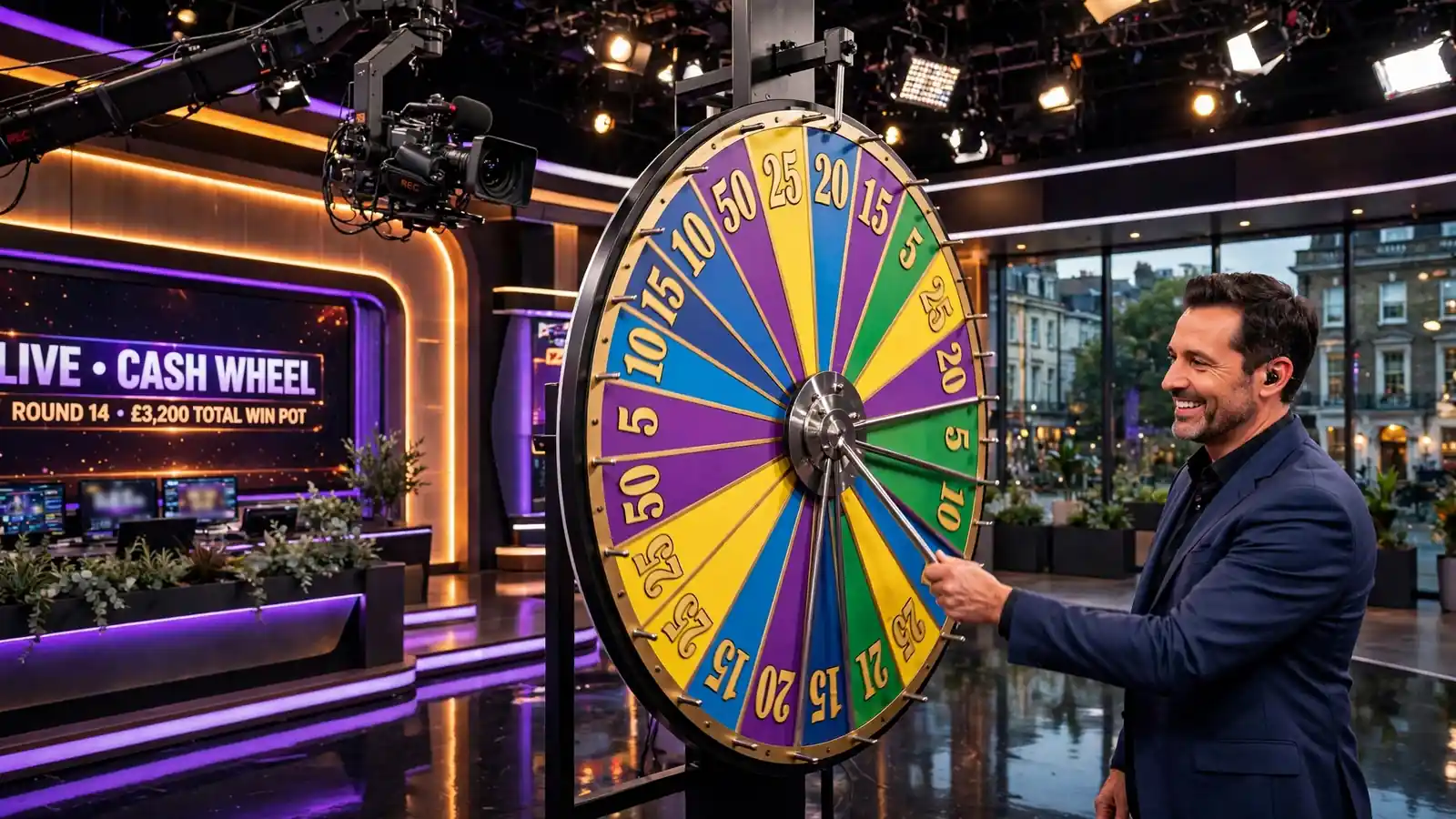
Table of Contents
- What “live” means in a Dream Catcher casino
- Dream Catcher in the UK: the licence check comes first
- How to assess a Dream Catcher casino without a “best” list
- Dream Catcher casinos: what the available evidence can establish
- Playing the game: slot limits are not roulette limits
- The wheel, and the rules that do not follow it
- Checking a Dream Catcher casino site before depositing
- A Dream Catcher demo: what can and cannot be confirmed
- Reading a Dream Catcher casino review with care
- Starting a live session without mistaking it for a slot
What “live” means in a Dream Catcher casino
“Live” describes the way a casino game is presented, not a guarantee about a particular site or a separate set of rules. In a live-casino format, the action is shown from a studio or table through a video stream, with a presenter or dealer leading the session. The screen becomes the route into the game: the physical action is broadcast, while the casino interface handles the player’s participation.
That distinction matters when considering Dream Catcher. The name refers to a game, while “live casino” describes the format in which a game may be presented. Neither phrase, by itself, identifies the company operating a casino or establishes that a particular site offers the game. I have seen those ideas run together in promotional copy. They answer different questions.
One question is about the game: what is Dream Catcher, and how does a round work? Another is about the experience: is it presented as a live session, with a real-time video feed and a host? A third is about the venue: which casino site makes it available? Those are separate decisions. A page that explains the game does not necessarily identify a playable casino, and a casino’s live-games page is not a substitute for understanding the game itself.
The wider UK market has used live presentation for more than one kind of casino game. Grosvenor unveiled its live casino games in 2013, with card and casino options that included Blackjack, Texas Hold’em and Roulette. That gives a useful piece of context: the live-casino category is broader than any one named game. It does not establish the history, provider or availability of Dream Catcher in particular.
Live Roulette UK with English-Speaking Dealers
The mechanics of a live session also differ from a conventional digital game. In a non-live game, the action is generated within the software and displayed on the screen. In a live presentation, a camera feed shows a host, dealer or other game action taking place in a studio or at a table. The interface still matters: it presents the available choices and records the player’s input. But the visible event is part of the experience, rather than an animation standing in for a streamed table.
That does not make “live” a quality label. It tells the reader something about presentation, not whether the game suits them, whether a site is reliable, or whether a particular version is available. Casino marketing often uses the word as if it settles all three. It does not. A live badge is a format description.
People looking for a Dream Catcher casino online may therefore be trying to do different things. Some want an explanation of the game; some want to watch a live session; others are trying to find a casino where it can be played. The phrase “online casinos with Dream Catcher” sounds like a request for a list, but the underlying need is usually more practical: identify whether the game is offered, and understand what the live label means before treating a casino page as evidence of availability.
Live Baccarat Online Casinos in the UK: Licence Checks
I separate the game from the venue because the distinction avoids a common misunderstanding. A game can be known by its title without every casino carrying it. A site can advertise a live casino without carrying every live game. And a game page can describe a format without proving that a session is currently accessible there. Each claim needs its own basis.
The word “live” can also suggest conversation or control over the event. In practice, the interface determines what a player can do; the camera feed shows the presentation. A host’s presence does not mean that the player is dealing the game or changing its underlying rules. It is a hosted format, not a private table arranged around each individual account.
For someone who wants to play Dream Catcher online, the useful first distinction is simple: game information explains what is being played; a live-casino page describes how it is shown; a casino site is the place offering access. I would not treat one as proof of the others. That is less exciting than a banner. More useful, too.
Responsible Gambling
Only gamble what can be afforded to lose, regardless of whether the game is streamed or generated by software.
A live session can feel more immediate because it shows a real-time presentation, but the format does not remove the ordinary need for restraint. The same money decision remains, whether the game is streamed or generated by software: only gamble what can be afforded to lose.
Our top casino picks for the UK
- DieselwinBonus: Welcome Pack 250% up to £4000 + 200 FS · Payout speed: 1-3 business days
- SpinFormulaBonus: 550% Up To £15,000 + 550 FS · Payout speed: 1-3 business days
- ChanzeBonus: Slots Welcome Bonus #1 200% up to €500 · Payout speed: 1-3 business days
- WinBeastBonus: €5000 + 500 FS + €650 Freebet · Payout speed: 1-3 business days
- EvoSpinBonus: 125% up to €2500 + 125 Free Spins · Payout speed: 1-3 business days
- x3betBonus: Welcome Pack 100% Up to £1.000 + 200 Free Spins · Payout speed: 1-3 business days
Dream Catcher in the UK: the licence check comes first
A live Dream Catcher game does not carry a gambling licence in its own right. The relevant permission belongs to the business providing gambling to customers, and the UK framework is concerned with that operator and its activity. That distinction is easy to miss when a game name is prominent on a casino page: the product may be the reason for visiting, but it is not the legal entity responsible for offering play.
For commercial gambling in Great Britain, the UK Gambling Commission is the sole regulator. Its remit includes online casino activity, as well as gambling offered remotely to consumers in Great Britain. The key point is that the location of the equipment running a remote service does not, by itself, take that service outside the Commission’s reach. A business cannot avoid the relevant British licensing requirement simply by placing its servers or other key equipment elsewhere.
That makes the regulatory question broader than where a live game is filmed, hosted or technically operated. What matters is whether a remote operator is serving customers in Great Britain and holds the appropriate Commission licence for that activity. The game’s name, studio presentation or casino branding does not answer that question. Different businesses can be involved in a customer’s experience, but the operator offering gambling is the central licensing concern.
Business licences and personal licences
The Commission issues operating licences to businesses and personal licences to individuals working in relevant roles in Great Britain. These are different forms of permission, not interchangeable labels. An operating licence concerns the business carrying out the gambling activity; a personal licence concerns an individual whose role falls within the licensing system.
Online American Roulette Casinos in the UK: What to Check
In practical terms, a casino brand is not automatically the same thing as the company holding the operating licence. A brand may be the public-facing name customers recognise, while a separate legal business operates the service. The distinction matters because a logo or product page is not proof of who is legally responsible. Nor does the presence of a named individual establish that the business itself has the required permission.
I find it useful to keep those layers separate. The customer sees a game and a brand; the regulatory framework looks to the licensed business and, where relevant, the people in regulated roles. No game title substitutes for either.
The licence requirement also applies to remote gambling directed at consumers in Great Britain, rather than only to businesses physically based there. The Commission’s reach is tied to the market being served, not just to an operator’s headquarters or technical setup. This is why a description such as “international” or “offshore” does not settle the licensing question. Those words describe positioning or location; they do not establish permission to offer gambling to the British market.
Great Britain and the wider UK
The language needs care because “UK” and “Great Britain” are not identical terms in gambling law. The Commission regulates gambling activity across the United Kingdom, including online casinos, but the specific remote-operator rule relevant here concerns consumers in Great Britain. The Gambling Act 2005 governs gambling in England, Wales and Scotland; it does not govern Northern Ireland. Those boundaries should not be blurred into a claim that one licensing rule applies identically in every part of the UK.
For someone considering a live casino game in England, Scotland or Wales, the essential framework is therefore clear: real-money online gambling is legal for adults aged eighteen and over when it is offered by an operator holding a UK Gambling Commission licence. Operators serving those customers must hold the relevant permission, regardless of where the key equipment is located. The Commission is the commercial gambling regulator for Great Britain.
This is a framework, not an endorsement of a particular Dream Catcher listing. A familiar game name can appear in a setting that gives little indication of which company is providing the gambling. Conversely, a business’s licensing status cannot be inferred from the game’s presentation. The legal responsibility sits with the operator, and personal licensing requirements apply separately to relevant individuals.
European Roulette Casinos in the UK: What to Check
Age verification is part of the customer-facing safeguards: an operator must verify a customer’s age before allowing a deposit into a gambling account. That requirement sits alongside the licensing framework rather than replacing it. A polished sign-up process, a live table or a named game does not establish that the operator holds the necessary permission.
The regulatory structure is not complicated once the roles are separated: the Commission regulates commercial gambling in Great Britain; businesses need operating licences for relevant activity; and individuals in regulated roles may need personal licences. For Dream Catcher, the game name is the starting point for identifying the kind of entertainment, not the answer to who may lawfully offer it. Any real-money play should be limited to money that can be afforded to lose.
How to assess a Dream Catcher casino without a “best” list
A “best” label is a conclusion, not evidence. In the case of a Dream Catcher casino, a polished page or a familiar game name cannot establish that the business behind the site is authorised to serve customers in Great Britain. I start the comparison with the operator, not the table, the welcome message or the order in which sites appear in a review.
That is less exciting than a ranking. It is also the point at which a comparison becomes useful.
Compare the operator before the offer
The relevant question is whether the business serving Great Britain consumers holds the appropriate Gambling Commission licence. The Commission requires remote operators serving this market to hold the relevant licence. A site’s use of UK wording, sterling prices or a recognisable casino game does not answer that question.
I look for the legal business name and then compare it with the Commission’s public register. The name on a site may be a trading brand, while the register may identify the licensed company behind it. Those names need to connect clearly. If the relationship is difficult to follow, the site has not made the most important part of the comparison easy.
Do
- Identify the legal business name of the operator
- Verify the licence number on the public register
- Connect the trading brand clearly to the licensed company
Don’t
- Accept a licence claim just because it is in a footer
- Rely on a badge or promotional paragraph as proof
- Treat a licensing reference as a general endorsement
A licence claim should be checked against the register rather than accepted because it appears in a footer, a badge or a promotional paragraph. A badge is a claim made by the site. The register is where that claim can be tested. Before depositing, the licence number should be verified there.
This does not make the register a general endorsement of every feature or offer on a site. It is a way to check the operator’s regulatory position. Keeping that distinction in mind prevents a common mistake: treating a licensing reference as proof that every other statement on the page is accurate.
Separate the game from the casino
The words “Dream Catcher casino” can blur two different things: a game and the business offering access to it. A game name is not a casino operator, and its presence on a site does not establish who is responsible for the account or whether that business is licensed for the British market.
So I compare casinos by asking the same operator-level questions, regardless of how prominently Dream Catcher is displayed. Who runs the site? Which company accepts the customer relationship? Does the licence record match that company or clearly connect it to the trading name? If the answers shift between pages, that is a reason to pause rather than infer a connection.
Casino dice games in the UK: how they work
I would not turn this into a league table based on claims that a casino is “best”. Without a sound basis for comparing the operators and their offers, a numbered ranking gives an impression of precision it has not earned. Placement can reflect editorial choice or commercial arrangements; it is not, by itself, a measure of licensing status.
The same caution applies to a casino’s own descriptions. “Trusted” tells little unless the underlying operator can be identified and checked. “Top live experience” is advertising language, not evidence of who holds the licence. I read those phrases as sales copy and return to the company name.
Make the comparison repeatable
A fair comparison uses the same test for every site. I note the operator’s stated legal name, look for the corresponding entry in the Gambling Commission register, and check that the licence number and business identity are consistent. If a site gives only a brand name, or sends the reader in circles between different company names, the comparison remains incomplete.
This is not a judgement about how entertaining a session might be. Nor does it confirm that a particular game is available, or that the site’s description of it is accurate. Those are separate claims and should not be smuggled into an operator comparison.
A sound process may leave fewer candidates than a glossy “best Dream Catcher casinos” list suggests. That is not a flaw. It means the comparison has removed businesses whose status could not be established, rather than rewarding whichever page made the strongest promise.
Operator Comparison
Step 1: Identify the Operator
Note the stated legal name of the business running the site.
Step 2: Search the Register
Look for the corresponding entry in the Gambling Commission public register.
Step 3: Verify Consistency
Check that the licence number and business identity are consistent with the site’s claims.
I also avoid treating a search result, an affiliate review or a site’s own copy as a substitute for checking the operator. Such material may help identify a name to investigate, but the licensing question belongs at the level of the business serving the customer. If that identity cannot be resolved, there is no solid basis for calling the casino a suitable choice.
The practical standard is deliberately plain: identify the operator, verify its licence, and only then compare the remaining claims. No ranking can do that work on a player’s behalf. And any gambling decision should stay within what can be afforded to lose.
Dream Catcher casinos: what the available evidence can establish
A page displaying Dream Catcher, a search result for a casino, and proof that a particular operator is authorised to serve customers in Great Britain are three different things. I have seen these treated as if they were interchangeable. They are not. A game title can appear in promotional copy without establishing who runs the site, while a brand name may differ from the legal business name recorded by the regulator.
That distinction matters when trying to establish whether a casino offering Dream Catcher is genuinely available to UK players. A listing or advert can indicate that someone is making the claim. It does not, by itself, confirm the operator’s identity, the status of its licence, or whether the stated website belongs to that operator. The game’s presence is not a shortcut through those questions.
There is a useful example of how narrow a register check can be. A specialist casino review reports that the public Gambling Commission register dated 26 September 2026 does not show a LuckyPays entry under that brand or its stated domain, including luckypays.io. That is a report about a particular name and domain at a particular date. It should not be stretched into a general finding about every casino, nor treated as proof of what Dream Catcher is available at. A register search has a defined scope. Names matter.
The same caution applies when a casino page says it offers live Dream Catcher. The wording may describe a product the site claims to carry; it does not establish that the claim is current or that the business behind the page is properly identified. I separate the product claim from the operator claim. The first is about what the page says. The second needs evidence tied to the business and its domain.
Live Casino Lightning Roulette in the UK: What to Check
Brand names can also complicate a straightforward search. A trading name, a company name and a website address may not look alike. That does not make a claim false, but it means a name match alone is weak evidence. A missing brand entry is not automatically the end of the enquiry, just as finding a similar-sounding name is not confirmation. The connection between the names has to be clear.
For Dream Catcher casinos in the UK, the evidence worth keeping is therefore specific: which site makes the offer, which business operates it, and whether the relevant public record supports that connection. Search visibility and confident promotional language are not substitutes. Neither is a game logo.
I would not describe a casino as confirmed on the strength of a result page alone. That is a claim about visibility, not status. Keep the distinction intact, and do not treat a promotional listing as a reason to deposit. Only wager what can be afforded to lose.
Playing the game: slot limits are not roulette limits
A casino lobby can place several games side by side, but the stake rules do not follow the lobby layout. The important distinction is the game category: an online slot is not treated as roulette or blackjack for the specific stake limits discussed here. That matters when a title is presented as a casino game, because the label alone does not establish which rules apply.
One specialist casino review gives the Great Britain online slot limits as £2 for adults aged 18 to 24 and £5 for those aged 25 or older, measured per game cycle. The figures should be read as that review’s account of the limits, not as a description of every casino game. The same review says the slot limits do not apply to roulette or blackjack. Category matters.
Dream Catcher may be encountered in a live-casino context, but a name or a casino menu heading is not enough to determine how a particular version is classified. Nor does the presence of a wheel settle the question: a wheel can appear in different kinds of products. The relevant point is not to assume that the slot limits apply simply because a game has a casino-style presentation, or that they apply to every product called a game.
Mines Casino Game in the UK: Demo Play Explained
In my experience, this is where promotional labels can blur a useful distinction. “Casino game” describes a broad setting; it does not tell a player whether a product is a slot, roulette or another format. The game’s rules and the operator’s information should make its nature clear. If they do not, it is better to pause than to infer the stake treatment from the title or visuals.
The limits described in the review concern slots, not roulette or blackjack. That does not mean every stake is appropriate or that other controls disappear. A casino’s published game terms and account controls still matter, and a player should wager only what they can afford to lose. Operators must verify age before allowing a deposit, and gambling is for adults aged 18 and over.
The distinction also matters when comparing a live table with an online slot. A live presentation does not, by itself, make a product a slot; equally, an animated or wheel-based design does not establish that it is roulette. Classification follows the game being offered, not the atmosphere around it. For anyone considering playing Dream Catcher at a casino, the sound approach is to check the product description and rules rather than transfer slot limits automatically.
Keep the categories separate. A slot rule is not a universal casino rule.
The wheel, and the rules that do not follow it
A wheel can make a casino game look simple to classify, but the image alone does not determine which stake rules apply. The relevant distinction is the game category: online slots are treated differently from roulette and blackjack. A specialist casino review states that Great Britain’s online slot stake limits do not apply to roulette or blackjack. That is a specific distinction, not a reason to treat every game with a wheel or a prize-style presentation as a slot.
This matters when considering a Dream Catcher-branded live game. The name and wheel imagery do not, by themselves, establish its precise format or the rules attached to a particular version. I would look at the game’s own description and rules rather than infer its category from the graphics. If it is presented as roulette, the cited slot limits should not be carried over to it; if it is an online slot, the slot rules are the relevant ones. Labels matter. So do the rules behind them.
Crazy Time Live Casino Game Show in the UK
A wheel-based format may still differ from conventional roulette in how outcomes are presented or how a round works. That does not make it a slot automatically, nor does the word “live” settle the classification. A live presentation describes how the game is delivered; it is not, on its own, a statement about stake-limit treatment. Those are separate questions.
The practical point is narrow but important: do not read a slot limit as a general ceiling for every casino game. The cited review draws the boundary at roulette and blackjack. It does not establish the detailed rules of every Dream Catcher version, or tell us how a particular operator classifies its product. A game’s published rules are the place to check what is being played, while the category determines whether the online slot limits are relevant.
That distinction can be obscured by “wheel” marketing: the word describes the visual hook, not necessarily the regulatory category. A wheel is not a rulebook.
I have seen players carry a limit from one game type into another simply because both sit in the same casino lobby. That is an understandable shortcut, but a poor basis for deciding what a wager means. The safer reading is to separate the appearance, the live presentation and the game category, then check the rules attached to the actual title. Whatever the format, only gamble what can be afforded to lose.
Checking a Dream Catcher casino site before depositing
A Dream Catcher title on a casino page is not proof that the business behind the page is authorised to serve customers in Great Britain. I treat the operator’s identity as the first check, not the game’s branding. Remote operators serving Great Britain consumers need the relevant Gambling Commission licence; a product name or a polished site does not replace it.
The practical step is to find the operator’s legal name and licence number on the site, then compare those details with the Commission’s public register. Check that the entry corresponds to the business taking the deposit, and look for the stated domain as well as the brand. A familiar name alone can be misleading: a brand, its operating company and the web address are not necessarily interchangeable.
Licence Verification
- Find the operator’s legal name and licence number on the site
- Compare details with the Gambling Commission public register
- Verify that the stated domain belongs to the listed operator
- Confirm that age verification is required before deposit
- Ensure a prompt to set a financial limit is provided
The register also has limits. It records licensing information; it does not certify that every page using a particular game title belongs to the listed operator, nor does a brand mention establish that a specific domain is covered. A specialist review reported that a register check dated 26 September 2026 did not identify a LuckyPays entry under that brand or its stated domain, including luckypays.io. That is a dated, specific observation, not a general finding about other casinos or Dream Catcher sites. Check the live register rather than relying on an old review.
I also look at what happens before money is accepted. A licensed operator must verify age before allowing a deposit, and new customers must be prompted to set a financial limit before their first deposit. Credit cards cannot be used for gambling at UK-licensed casinos. These are operational checks, not decorative trust badges.
If the operator’s identity, licence entry or domain does not line up, I would not proceed on the strength of a logo, game listing or customer-service reassurance. Resolve the discrepancy through the regulator’s register first. Then consider the account controls and payment route. A careful check is less exciting than opening a live table. It is more useful.
Only gamble what can be afforded to lose.
A Dream Catcher demo: what can and cannot be confirmed
A request for a Dream Catcher demo is really about whether the game can be explored without staking real money. The wording on a casino page is not enough to establish that such an option exists. A button marked “demo” or “free play” is a claim about access; it does not, by itself, confirm what the session contains, whether it is available in the UK, or whether it matches the real-money game.
I separate those questions. First comes availability: the casino would need to show a playable, no-stake version, with its terms clear. Then comes scope: a demonstration can illustrate a game without establishing that every condition or feature is identical when money is involved. Without clear information from the operator, neither point should be assumed. A live-game label does not settle it.
Real-money play is a different matter. In the UK, online gambling is legal only through an operator holding the relevant UK Gambling Commission licence. The operator must verify a customer’s age before allowing a deposit; online gambling is for adults aged 18 and over. A demo, if offered, does not replace those checks when moving to a funded account.
Chicken Road casino game in the UK: what to verify
The protections tied to real-money gambling matter at that stage: operators must provide account-level limit controls and prompt new customers to set a financial limit before their first deposit. Licensed casinos must also provide responsible-gambling tools, including self-exclusion. Those requirements concern the gambling account and real-money activity, not proof that a particular Dream Catcher demo exists.
I have seen “free” used as though it answers every practical question. It does not. The useful distinction is whether the session involves a real stake, and what the operator says about access and conditions. Before depositing, the licence should be checked on the Gambling Commission’s public register. Any decision to gamble should be limited to money that can be afforded to lose. A demo claim is not a safety check.
Reading a Dream Catcher casino review with care
A review can sound precise while leaving its most important claim untested. I separate statements about a casino operator from statements about Dream Catcher itself. The first can often be checked against a public record; the second may be description, sales copy or an account of one person’s experience.
For a UK-facing casino, licensing is not established by a review’s “trusted” or “safe” label. The UK Gambling Commission regulates remote gambling offered to people in Great Britain, and the operator must hold the relevant licence. A review that names an operator should make it possible to identify that business, rather than relying on a logo or a general assurance. The licence number and the operator’s details can then be checked on the Commission’s public register before any deposit. A review is not a substitute for that check.
Promotional wording needs translation. “Seamless” may mean only that a reviewer found the page easy to use; “exclusive” may describe a marketing arrangement, not a special version of the game. I look for observable details behind such labels and treat an unsupported adjective as advertising, not evidence.
Claims about a particular Dream Catcher live casino experience need the same discipline. A review may describe a session, but that does not establish that every casino offers the same game, presentation or terms. Nor does a confident paragraph prove that the reviewer tested the stated features. Distinguish what is shown directly from what is asserted, and note whether the review identifies the casino and the basis for its claims.
The commercial context matters too. A review may be written to encourage registration, so prominent bonuses or enthusiastic verdicts can sit alongside less visible conditions. That does not make every review unreliable; it means the purpose and evidence deserve attention. Promotional language is not verification.
I give more weight to checkable operator details than to star ratings or sweeping assurances. If the review leaves the operator unclear, or treats game claims as proof of regulation, it has not answered the practical question. The review is only a starting point. Before depositing, verify the licence on the UK Gambling Commission register, and gamble only what can be afforded to lose.
Starting a live session without mistaking it for a slot
A live casino session and an online slot are different kinds of play. A live game is presented through a streamed casino setting; a slot is a digital game built around spins. The name Dream Catcher alone does not establish how a particular site presents or classifies its version, so the game’s own information matters before staking.
That distinction affects how a reported rule should be read. A specialist gambling review states that the Great Britain online slot limit is £5 per game cycle for adults aged 25 and over, and £2 for those aged 18 to 24. The same review says those slot limits do not apply to roulette or blackjack. They are not a general cap for every casino game, and should not be treated as a confirmed Dream Catcher limit.
Before play, the operator must verify age before allowing a deposit. Real-money online gambling in the UK is legal only with an operator holding the relevant UK Gambling Commission licence; the licence number should be checked on the Commission’s public register before depositing. These are separate checks: one concerns eligibility, the other the operator.
A first session also benefits from a firm spending boundary. Set a financial limit before depositing, use the account controls where available, and stop when that limit is reached. I have seen “live” used as a selling word, but it does not change the basic decision: money staked can be lost. Only gamble what can be afforded to lose.
Are online casino games licensed and regulated?
In Great Britain, the operator providing online gambling to customers must hold the relevant UK Gambling Commission licence. The Commission regulates commercial gambling, including online casinos; a game itself does not hold the operator’s licence.
What are the online slot stake limits in Great Britain?
The limit is £5 per game cycle for adults aged 25 and over, and £2 for adults aged 18 to 24. These limits do not apply to roulette or blackjack.
Is LuckyPays licensed by the UK Gambling Commission?
The Commission’s public register dated 26 September 2026 does not show an entry for LuckyPays or its stated domain, luckypays.io.
Published by the Grovers Casino team.