Casinos That Accept Bank Cheques in the UK
 Available in GB
A Boku listing points to mobile billing, while cheque, bank-transfer and withdrawal routes require separate evidence.

Table of Contents
- Cheque deposits and pay-by-phone are not the same thing
- What UK casino licensing establishes—and what it does not
- How a Boku deposit reaches a casino account
- Why pay-by-phone options have been disappearing
- The limits behind a Boku deposit
- Where the money comes from on a mobile bill
- A deposit method is not a withdrawal method
- Pay by mobile, Fonix and network support
- Bonus terms can exclude phone payments
- The Neteller route—and the limits of the available evidence
Cheque deposits and pay-by-phone are not the same thing
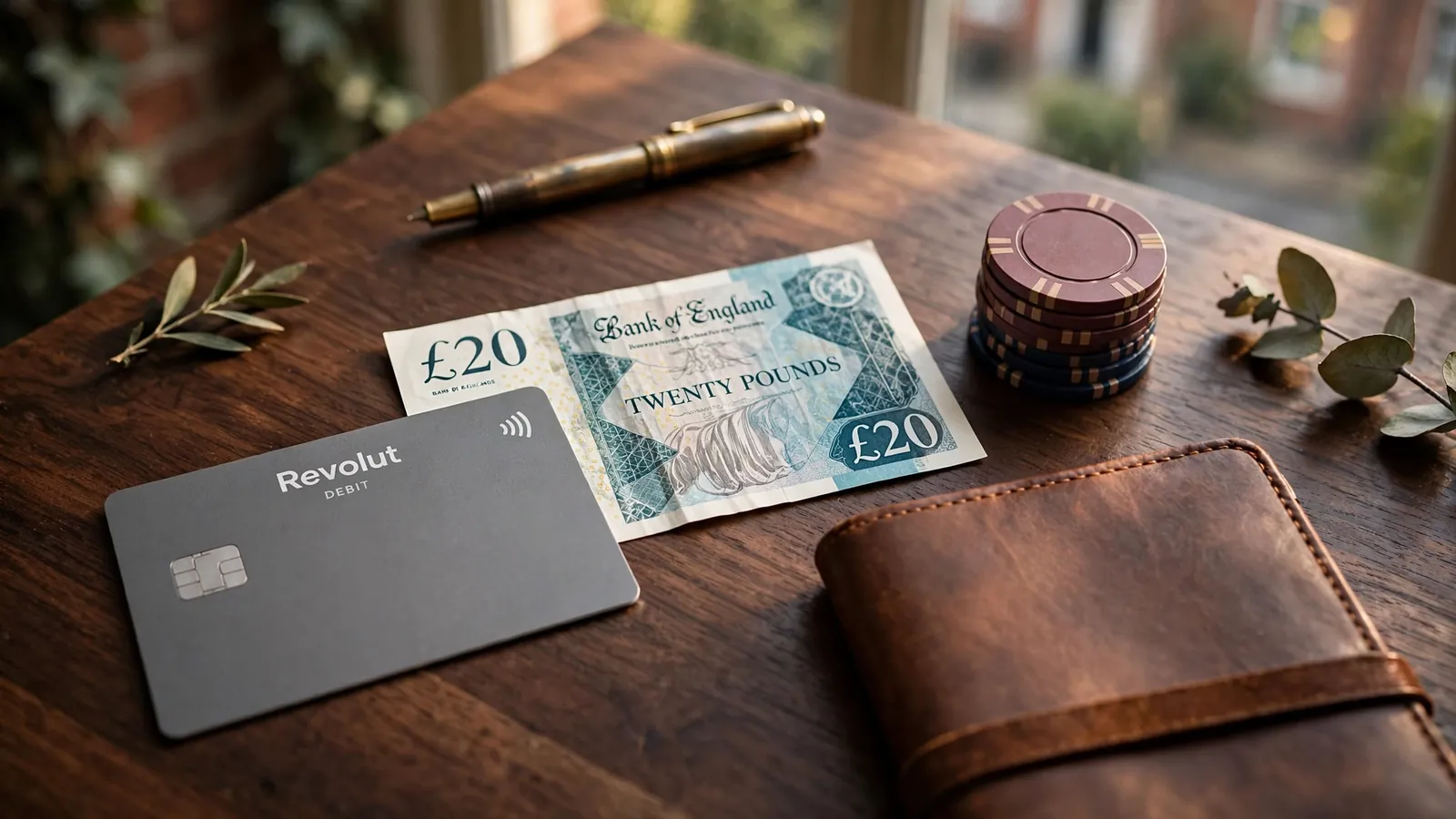
A bank cheque and Pay by Phone solve different payment problems. A cheque is a bank-based payment instrument; Pay by Phone sends a charge through a mobile network, usually to a phone bill or prepaid balance. Seeing Boku in a casino cashier therefore says nothing about whether that operator accepts a cheque. The methods are not interchangeable, and a list of casinos offering one cannot stand in for a list offering the other.
That distinction matters when looking for online casinos that accept bank cheques in the UK. Casino payment pages can group several options under broad labels such as “banking” or “mobile payments”, but the label does not establish which transaction types are available. A bank transfer, a card payment, a cheque and a phone-bill charge each have their own route. Evidence for one should not be stretched to support a claim about another.
The same applies to lists headed as the best UK casinos that accept bank cheques. A casino appearing in a Boku list may be relevant to someone seeking Pay by Phone, but it is not thereby a cheque-accepting casino. I would treat a named operator as a cheque option only where its own current payment information explicitly identifies cheque deposits and explains how they are made. Otherwise, the claim remains unsubstantiated.
The distinction is easy to lose because both methods can be described as ways to put money into a gambling account. That is only the outcome, not the payment mechanism. With Boku, the charge is tied to the mobile account. With a cheque, the payment would have to be handled through a bank-based process. One cannot infer the second process from the presence of the first.
There is a small, identifiable group of UKGC-licensed casinos where Boku has been reported as a deposit option. That group is not a stable proxy for cheque acceptance, and its membership has narrowed over time since 2023. In other words, even a Boku list needs checking before it is treated as current; it still cannot answer which online casinos accept cheque deposits in the UK.
Casinos That Accept eCheques in the UK: Evidence Check
The regulator’s role also needs to be kept separate from the cashier’s menu. The UK Gambling Commission regulates gambling activity in the United Kingdom, including online casinos, and its remit for remote gambling covers services offered to consumers in Great Britain regardless of where the key equipment is located. That regulatory scope does not turn a licence into confirmation of a particular payment method. A licensed casino’s banking options remain a separate question.
This is why wording such as “casinos that accept cheques” needs to be used carefully. It should mean that the operator has stated that cheque deposits are supported—not that the operator accepts Boku, another Pay by Phone service, or some other payment method that happens to serve the same purpose of funding an account. When a payment page gives no clear cheque option, there is no sound basis for presenting that casino as a cheque site.
For someone comparing UK online casinos that accept bank cheques, the practical distinction is between a named payment route and a broad promise about deposits. A cashier entry for Boku is evidence of a phone-based route. It does not establish that a paper cheque can be sent, that a cheque can be used to fund an account, or that the casino will process one. Those are separate claims and require separate confirmation from the operator.
The phrase “top casinos that accept cheques” can also imply that a verified shortlist exists. They describe a different method, and turning them into a cheque ranking would mislead rather than help. I would rather leave an operator off a cheque list than give it a status based on an unrelated cashier option.
So the useful starting point is not to search for a shared category called “alternative deposits”, but to distinguish the instrument itself. A bank cheque is not Pay by Phone. Boku is not a cheque service. Casino licensing establishes the regulator’s relationship with the operator, not the availability of either method. Those distinctions keep payment claims precise—and prevent a Boku list from being mistaken for an answer about cheque deposits.
Attention: A casino appearing on a Boku or Pay by Phone list is not necessarily a cheque-accepting casino; these methods are not interchangeable.
Our top casino picks for the UK
- DieselwinBonus: Welcome Pack 250% up to £4000 + 200 FS · Payout speed: 1-3 business days
- SpinFormulaBonus: 550% Up To £15,000 + 550 FS · Payout speed: 1-3 business days
- ChanzeBonus: Slots Welcome Bonus #1 200% up to €500 · Payout speed: 1-3 business days
- WinBeastBonus: €5000 + 500 FS + €650 Freebet · Payout speed: 1-3 business days
- EvoSpinBonus: 125% up to €2500 + 125 Free Spins · Payout speed: 1-3 business days
- x3betBonus: Welcome Pack 100% Up to £1.000 + 200 Free Spins · Payout speed: 1-3 business days
What UK casino licensing establishes—and what it does not
A gambling licence answers a question about legal authority, not about the contents of a casino’s cashier. In Great Britain, the UK Gambling Commission is the regulator responsible for commercial gambling. Its role is to oversee the businesses offering gambling and the people who perform regulated functions within them. That framework establishes who may operate in the market; it does not certify every service or payment option an operator makes available.
The distinction matters when assessing casinos described as accepting bank cheques. A current UKGC operating licence does not, by itself, show that a casino takes cheque deposits. Nor does it establish that the cashier offers Boku or another Pay by Phone method. Those are operator-level payment arrangements, which can change independently of the operator’s licensing status.
The Commission issues licences at two levels. Businesses need operating licences for the gambling activities they provide, while individuals carrying out relevant roles may need personal licences. These permissions are not interchangeable: a personal licence does not authorise a casino business to offer gambling, and a business licence is not a statement that every employee has an individual licence. The regulator’s register is therefore useful for checking an operator’s authorisation, but it is not a payment-method directory.
I have seen the distinction blurred in the way casino claims are presented. “Licensed” can sound like a general endorsement, as if the regulator has checked and approved the entire customer experience. In practice, the licence concerns permission and regulatory obligations. It does not amount to a recommendation, a promise about a particular cashier option, or confirmation that a bank cheque will be accepted.
The geographical scope
The relevant regulator for commercial gambling in Great Britain is the UK Gambling Commission. The Gambling Act 2005 provides the main legislative framework for England, Wales and Scotland; Northern Ireland is outside that Act’s scope. That geographical distinction matters because “UK casino” is often used casually to describe a market that has different legal arrangements across the United Kingdom.
Casinos that accept eCheck in the UK: what to check
For remote gambling, the location of a company or its equipment does not remove the licensing requirement when it offers gambling to consumers in Great Britain. An operator based elsewhere cannot rely on its overseas location as a substitute for the relevant British permission. A licence from another jurisdiction is not the same thing as a UKGC licence.
That point is about the operator’s authority to serve the market, not the player’s choice of payment instrument. A casino could hold the required operating licence while offering only a narrow selection of deposit methods. Another licensed casino could have a different cashier. The regulator’s remit should not be read as a ruling on whether a specific transaction type is supported.
What the licence check can establish
A register check can help establish whether the named business holds the relevant UKGC authorisation. The name on the website and the licensed legal entity may not be identical, so the identity of the operator matters as much as the brand displayed to customers. This is a compliance check, not a shortcut to deciding whether a payment claim is accurate.
The licence also sits within a wider system of obligations for operators. It is not a badge that makes every individual feature permanent. Payment providers and casino operators can change their arrangements; a cashier option seen previously may not remain available. Licensing status and payment availability therefore need separate checks, made for separate purposes.
For someone comparing bank-cheque casinos in the UK, the practical boundary is straightforward: UKGC licensing can establish that an operator is authorised to provide regulated gambling in Great Britain, but it cannot establish that the operator accepts cheques. The same boundary applies to Pay by Phone. A payment claim has to be assessed against the casino’s own current cashier information, rather than inferred from its licence.
That is the limit of the licence. It establishes authority, not a payment promise.
How a Boku deposit reaches a casino account
A Boku deposit begins inside the casino’s cashier, not in a banking app. The player signs in, opens the deposit area and selects Boku from the payment methods shown. That selection matters: the cashier determines which routes are available to that account at that point. A payment method listed on a general information page is not necessarily available in every account or at every stage of registration.
Casinos that accept Neosurf in the UK: what to check
Once Boku is selected, the cashier asks for a deposit amount and a mobile phone number. The number links the casino transaction to the phone account that will be charged. It is worth treating those details as part of one transaction rather than as separate forms: the amount is entered at the casino, while the phone number identifies where the payment request is sent.
The amount field may offer preset choices, or it may allow an amount to be entered. A specialist review describes Boku deposits as restricted to amounts divisible by ten, giving £10, £20 and £30 as examples. That is a reported condition, not something to assume applies identically to every cashier. The options actually displayed during the transaction are the practical test.
After the amount and number are submitted, Boku sends an SMS verification code to the phone. The player enters that code in the cashier to confirm the payment. Until that confirmation is completed, the payment has not followed the full stated Boku flow. The code is therefore not just another detail on the deposit screen; it is the step that connects the casino’s request with approval through the mobile number provided.
From an operator’s side of the counter, this sequence separates the casino’s account entry from the payment authorisation. The casino collects the requested amount and phone number, then relies on the SMS step to confirm the transaction. That is why a mistyped number can interrupt the process even if the casino account itself is open and ready for a deposit. The casino cashier and the phone have to refer to the same intended payment.
A failed or incomplete attempt can leave the player unsure where the interruption occurred. The useful distinction is between what was entered at the casino and what was confirmed by SMS. If the code was never entered, the confirmation step remains outstanding. If the cashier rejects the request before that point, the issue has occurred earlier in the flow. The exact message on screen is more informative than repeatedly submitting the same details.
Boku Deposit Process
Step 1: Selection
Select Boku from the casino cashier and enter the deposit amount and your mobile phone number.
Step 2: Verification
Receive an SMS verification code on your phone and enter it into the casino cashier.
Step 3: Completion
Submit the code to authorize the transaction and complete the deposit flow.
This is also why the deposit screen should be read as a transaction interface, not as a general promise that a particular payment route will work for every player. The cashier presents the route, requests the information needed to initiate it, and waits for the code confirmation. Those are the observable stages. Other questions—such as what happens after the payment is authorised, or what limits apply—belong to separate parts of the process and should not be inferred from the SMS prompt alone.
The wording around payment methods can make the process sound simpler than it is. “One-tap” suggests that selecting Boku is enough; in practice, the amount, phone number and SMS confirmation are distinct actions. “Instant” would imply a timing guarantee that the steps themselves do not establish. I would read the cashier literally: select, enter, confirm. No more than that.
That distinction matters when comparing payment routes. A cheque is not entered into this Boku sequence, and the SMS confirmation does not turn a phone-billed deposit into a bank-cheque payment. The transaction described here is specifically a Boku deposit initiated through the casino cashier and authorised using a code sent to the supplied mobile number. The method is defined by that route, not by what a player might call it informally.
In practical terms, the key checkpoint is the confirmation screen or message after the code is submitted. Before that point, the deposit journey is still in progress; after it, the player has completed the stated Boku confirmation flow. The amount and number begin the request. The code completes the authorisation step.
Casinos That Accept MuchBetter in the UK
Why pay-by-phone options have been disappearing
A specialist review describes a shift away from Boku among casino operators since 2023. Its account identifies three outcomes: replacing Boku with Fonix, switching to Siru Mobile, or removing pay-by-phone payments altogether. That is a change in operator cashiers, not evidence that every site has made the same decision or that one replacement has become universal.
I read this as a commercial and compliance choice made site by site. A casino can decide that the risks and work involved in supporting a particular payment route no longer suit its business. The review attributes Boku’s removal to compliance risk, but that does not establish a single rule or event behind every operator’s decision. Nor does it mean that pay-by-phone as a category disappeared wherever Boku was removed.
The distinction matters because a cashier can change without the casino itself closing or changing its licence. A payment option is a separate service an operator chooses to offer. When that choice changes, a method that appeared in an older list may no longer be available to a new or existing customer. Lists of casinos accepting Boku therefore need to be treated as time-sensitive, rather than as permanent descriptions of each site.
A change in operator policy, not a named ban
The UK Gambling Commission did not introduce a specific rule banning Boku by name. Individual casino operators dropped it in response to compliance risk. Those statements can both be true: a regulator can set obligations for licensed gambling businesses, while each business decides which payment providers and processes it is prepared to maintain.
The removal of Boku by individual operators is a commercial and compliance decision; it is not the result of a specific UKGC ban on the service.
That difference is easy to lose in shorthand. Saying that Boku “was banned” suggests a direct prohibition applying to the method across the market. The available account instead describes operators removing it from their own payment options. I would not treat a missing Boku button as proof of a UKGC ban, or assume that a casino using another Pay by Phone provider has taken the same decision for the same reason.
There is also a practical consequence for anyone comparing payment choices. “Pay by phone” can describe a broader type of payment, while Boku is one named route within it. An operator moving from Boku to Fonix or Siru Mobile has changed the provider available through its cashier; it has not necessarily abandoned phone-based payments. Another operator may remove the category altogether. The label alone does not tell which arrangement is in place.
Why old lists can mislead
The shrinking set of direct Boku options makes older references particularly unreliable. A casino may once have accepted Boku and later removed it, while a different site may retain another phone-payment service rather than Boku itself. Those are materially different situations for a player trying to choose a deposit method.
The same caution applies to lists presented as a selection of cheque-friendly casinos. A casino’s payment menu needs to be checked for the actual method in question; a history of Boku acceptance cannot establish that bank cheques are accepted. Payment labels are not interchangeable.
From an operator’s side, removing a method is often less visible than adding one: the cashier simply presents fewer choices. From the player’s side, the change can look like a market-wide prohibition when it is actually a series of individual decisions. The distinction is plain, but important.
The limits behind a Boku deposit
A Boku limit is not one universal figure. The amount shown in a casino cashier can reflect the operator’s settings, while a separate cap may be applied by the mobile network. A specialist review gives a UK transaction limit of £30, with some casinos or network operators permitting deposits of £40 or £50. Those figures should not be read as a promise that every account or phone can use the same ceiling.
Ukash Casinos in the UK: What Acceptance Means
There is also a direct disagreement between descriptions of the network-level limits. One account puts the typical transaction at about £10 and the daily total at £30. Another describes a £30 daily limit but specifies no per-transaction cap. They cannot be combined into a single reliable rule: the first supplies both a transaction and daily figure, while the second only states a daily figure. I would treat the per-transaction amount as unsettled rather than assume that either description applies to every customer.
The difference matters in practice. A casino may display an amount that appears to fit its own cashier rules, yet the mobile operator can still refuse the charge if its limit has been reached. A specialist review attributes enforcement of the daily Boku limit to the mobile operator rather than the casino. That is a useful distinction, but it is not a fixed guarantee across networks or over time.
The casino controls what it makes available in its cashier. The phone network controls whether the bill or account can accept the charge under its own limit. A declined payment may therefore come from the network side even when the casino has accepted the selected amount as an available deposit option. The two checks sit in different places.
This is a point often blurred by broad payment labels. “Flexible” may describe the fact that a payment is routed through a phone account; it does not mean the casino can override a network cap. Nor does a figure attached to one operator establish the limit at another casino or on another mobile account.
These are Boku and Pay by Phone constraints, not rules for bank cheque deposits. A cheque is a different payment instrument, and none of the figures above should be used to estimate a cheque deposit limit. For Boku, the practical limit depends on the cashier option and the network’s own decision. Separate controls.
Casinos That Accept Ethereum in the UK: Payment Checks
Where the money comes from on a mobile bill
Boku does not take the deposit from a bank cheque. It routes the payment through the mobile account, so the source of the money depends on whether the phone is on a monthly contract or a pay-as-you-go plan. That distinction is easy to miss when a cashier presents both as the same button.
For a monthly-bill customer, the Boku payment is added to the mobile account and collected through the network’s billing arrangement. The casino receives a deposit, while the player’s phone bill becomes the record of the charge. In practical terms, the payment is not drawn from a bank account at the moment of deposit. It is billed through the mobile provider.
With pay-as-you-go, there is no monthly account to charge. The payment is deducted from the available phone credit instead. A specialist payment-method review describes the balance as a hard constraint: a deposit cannot exceed the remaining PAYG credit. If that balance is short, the payment cannot be funded from it. No hidden cheque-clearing process sits behind the transaction.
That is the useful distinction for anyone comparing bank cheque online casinos with Pay by Phone options. A cheque begins with funds held through a bank and relies on cheque handling; Boku uses the phone account as its payment source. The two methods may both be described as ways to put money into a casino account, but they do not work through the same financial channel.
I have seen payment labels do a lot of work in a cashier. “Mobile payment” sounds broad; the underlying charge is narrower. On a contract, it is billed to the mobile account. On PAYG, it comes out of prepaid credit. That can matter when the phone account is shared, when a customer tracks household bills, or when the available balance is already committed to other services. The cashier may show a successful deposit flow, but the funding still depends on the mobile account being able to carry the charge.
This is why a list advertised as the best bank cheque casinos UK should not be treated as a list of Boku sites. One describes a banking instrument; the other describes a phone-billed payment route. The distinction is not cosmetic. It determines where the charge appears and what balance supports it.
Do
- Check for explicit mention of bank cheques in the cashier
- Verify the funding source (monthly bill vs. PAYG credit)
Don’t
- Assume a Boku list is a list of cheque-accepting casinos
- Mistake phone-billed payments for bank-based instruments
The phone is the funding channel. Not the bank.
A deposit method is not a withdrawal method
A payment option can solve the problem of getting money into a casino account without providing a way to get winnings back out. Boku is a deposit-only method: it can fund an account, but casino funds cannot be withdrawn to it. That makes it different from a complete banking option, even when it appears alongside other methods in the cashier.
The distinction matters because a cashier can make a deposit route look like an all-purpose payment service. It is not. Boku cannot serve as the destination for a withdrawal, so anyone depositing with it needs a separate withdrawal method registered with the casino. That route must be considered before the first deposit, not after a balance has been built up.
For a UK player comparing an online casino cheque deposit with Pay by Phone, the two ideas should not be collapsed into one. Boku charges a deposit through the mobile account; it does not process a bank cheque, and it does not return winnings to the phone bill. Nor does the presence of Boku in a cashier establish that the same casino accepts bank cheque deposits. Those are separate payment questions.
In operational terms, a casino account has an incoming side and an outgoing side. An operator may offer a method on the incoming side without supporting it for payouts. With Boku, that limitation is explicit: it is for deposits only. A bank cheque, where offered, would need to be assessed as its own funding method rather than treated as a substitute withdrawal route.
I would therefore compare the cashier’s deposit and withdrawal options separately. A debit card, e-wallet or bank transfer may be listed as an alternative withdrawal route, but availability depends on the operator and account. The important point is not to assume that a method used to pay in will also be available for cashing out.
That is the practical difference between a deposit convenience and a banking arrangement. Boku can get funds into the casino balance; it cannot complete the return journey. Before depositing, the withdrawal route needs to be clear, and the casino’s UKGC licence should be checked on the public register. A deposit option alone is not enough.
Casinos That Accept WebMoney in the UK: What to Check
Pay by mobile, Fonix and network support
“Pay by mobile” describes a way to charge a payment to a mobile account; it does not identify a single provider. Boku and Fonix are separate services, and a casino listing one should not be assumed to accept the other. That distinction matters when checking the cashier: the payment label needs to match the service actually offered.
EE, O2, Vodafone and Three support Pay by Phone and Fonix. Network support is only one part of the route, though. The casino must also offer the relevant provider, and the payment option shown can differ between operators. A phone account being compatible with a service does not mean that service will appear in every casino cashier.
A specialist review lists MrQ and Duelz as casinos using Fonix, while Mr Vegas and Videoslots are listed with Siru Mobile. Those are examples of operators associated with other pay-by-phone providers, not evidence that they accept Boku. Nor do they establish acceptance of bank cheques. Payment labels are not interchangeable.
That is where broad category wording can mislead. A page describing casinos that take mobile payments may combine operators using Boku, Fonix or Siru Mobile, although each has its own cashier listing and conditions. In my experience, the useful check is the provider’s name at the point of deposit, rather than a general claim that a casino accepts phone payments. Small distinction. Material difference.
For anyone comparing casinos that accept cheques in the UK, these network and provider names do not answer the cheque question. They describe phone-billing routes only. A casino’s acceptance of one payment service cannot be used to infer that it will process a bank cheque, just as support from a mobile network does not confirm that a particular casino offers that network’s payment route.
Bonus terms can exclude phone payments
A payment option appearing in the cashier does not mean a deposit made through it will count towards a welcome offer. The cashier controls how money reaches the account; the promotion’s terms decide which deposits qualify. Those are separate settings, and they do not always line up.
I have seen the distinction cause confusion: a deposit can be accepted and credited while remaining outside the offer calculation. Pay by Phone deposits are commonly excluded from welcome offers, so the relevant terms need to be checked before depositing. A bank-cheque deposit raises a separate payment-acceptance question; bonus wording alone cannot establish that a casino accepts cheques.
Eligibility varies by operator. A specialist review identified MrQ, Duelz, Mr Vegas and Videoslots as casinos where Pay by Phone deposits were accepted for bonus eligibility. Treat that as a time-sensitive finding, not a standing promise: payment and promotion terms can change, and the offer rules still govern the particular promotion.
A specialist review also reported that the platforms it assessed did not impose Boku-specific deposit restrictions, while noting that Boku deposits generally did not come with a dedicated bonus. That does not mean every offer accepts Boku, or that a general welcome promotion automatically applies. “No restriction” can describe the deposit method’s treatment on an assessed platform; it is not the same as an explicit statement that a particular bonus qualifies.
The useful distinction is between method availability and promotion eligibility. The former is visible in the cashier; the latter sits in the offer terms, often under qualifying deposits or excluded payment methods. If Pay by Phone is not clearly included, the offer should not be assumed to apply. A credited deposit is not proof of bonus qualification. Check the terms first.
The Neteller route—and the limits of the available evidence
A specialist review describes an indirect route: fund a Neteller account using Boku, then use Neteller to deposit at a casino that accepts the e-wallet. That is a different payment chain from paying a casino through Boku directly. It depends on both services being available for the relevant accounts, and on the casino accepting Neteller.
The distinction matters because a payment route can sound broader than it is. A Boku-funded Neteller balance does not turn Boku into a casino cashier option, nor does it establish that the casino accepts every way of funding Neteller. I would treat the route as a possibility to verify at each step, not as a general feature of UK casino accounts.
It also says nothing about bank cheques. Neteller is an e-wallet, while Boku charges a payment to a mobile account; neither is evidence that a casino will take a cheque drawn on a bank account. An indirect route through an e-wallet cannot fill that gap.
For a cheque deposit, the relevant confirmation would have to come from the casino’s own payment information or support team, with the method explicitly described as a bank cheque. A site listing Boku or Neteller in its cashier is not a cheque-acceptance list. Different instruments, different processing.
What are the deposit limits at pay-by-mobile casinos?
Boku is typically limited to about £10 per transaction and £30 per day at network level, although some casinos or mobile operators may allow up to £40 or £50 per transaction. The amount you can deposit also depends on your available PAYG balance or mobile operator limit.
Are Boku casinos still available in the UK in 2026?
Yes, a small number of UK casinos still accept Boku, but the list has been shrinking since 2023. Check the casino cashier, as some operators have switched to Fonix or Siru Mobile or removed pay-by-mobile deposits.
What is the best alternative to Boku for casino deposits?
Fonix and Siru Mobile are pay-by-mobile alternatives used by some UK casinos. MrQ and Duelz accept Fonix, while Mr Vegas and Videoslots accept Siru Mobile.
How can I be sure Boku is available where I live?
Check whether Boku appears in the casino’s cashier and whether your mobile operator supports pay-by-mobile payments. Supported UK networks include EE, O2, Vodafone and Three.
How does Boku work?
Choose Boku in the casino cashier, enter the deposit amount and your phone number, then confirm using the SMS verification code. The charge is added to your monthly phone bill or deducted from your PAYG credit; Boku deposits cannot be used to withdraw casino funds.
Created by the ”Grovers Casino” editorial team.