Online Craps Casinos in the UK: What to Check
 Available in GB
Game labels and table visuals do not establish whether play involves money or has real-money availability.
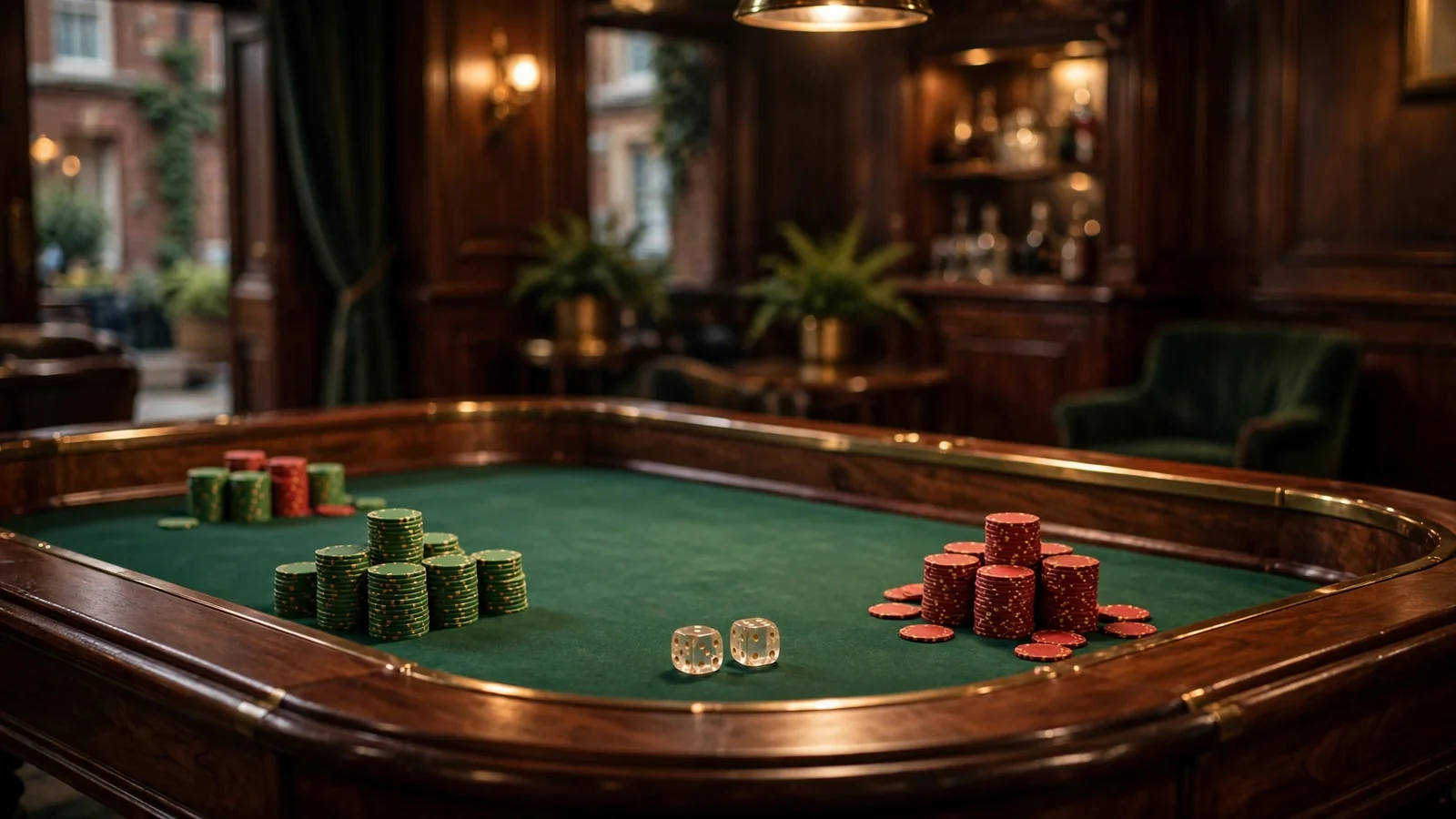
Table of Contents
- Real-Money Craps: What the Casino Arrangement Actually Means
- Craps in the UK: The Regulatory Framework
- Assessing UK Casinos for Online Craps Without an Unsupported Shortlist
- Craps Tips: Separate Game Decisions from Casino Claims
- Free Craps and Bubble Games: What Can Be Confirmed
- Learning the Basic Flow of a Craps Game
- Live Dealers, Crypto and Crapless Craps: Evidence Before Claims
- Craps House Edge: No Verified Figure to Quote
- The Odds of Winning at Craps
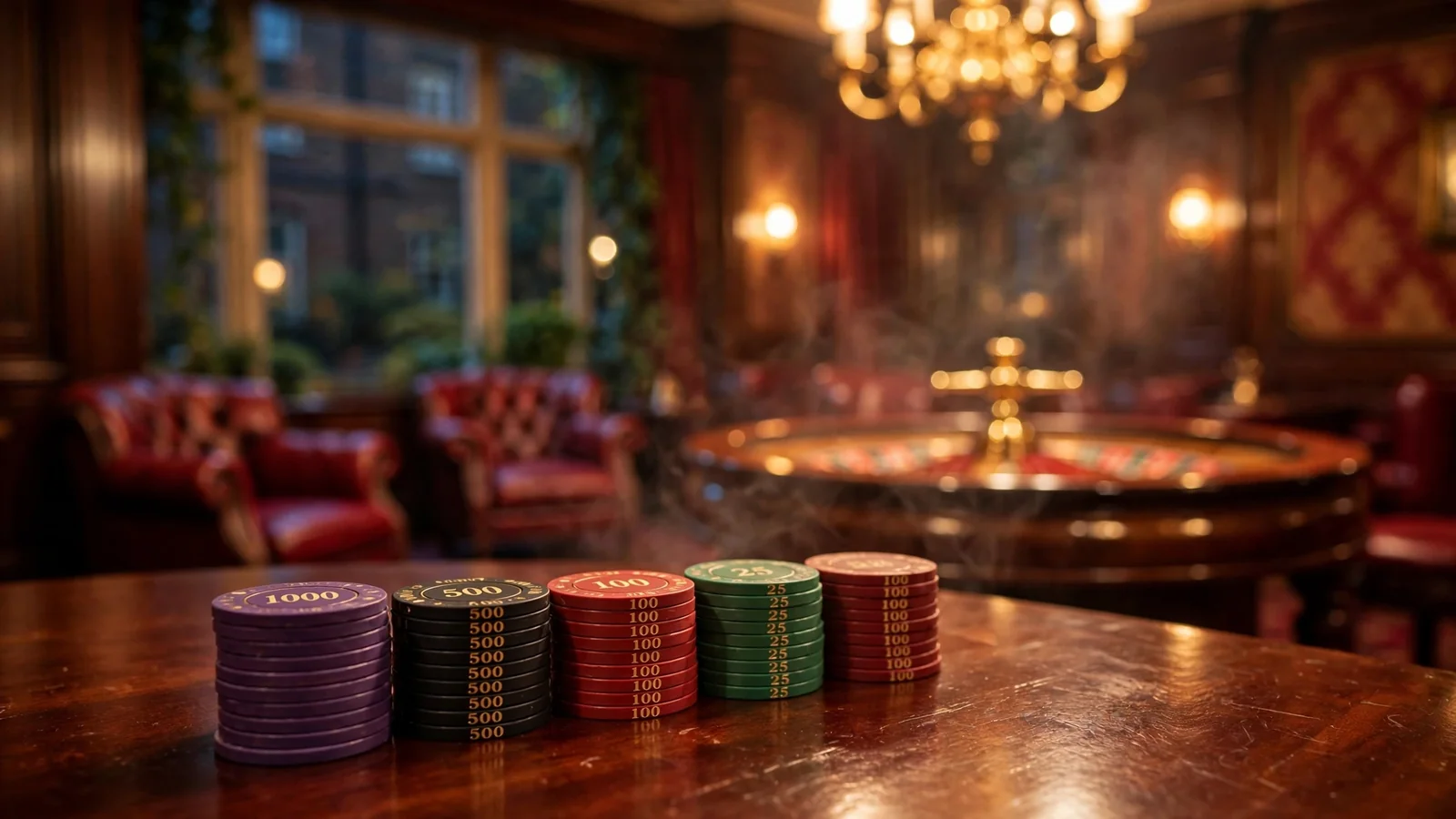
- Craps Chips and Table Layout: Details Still to Verify
Real-Money Craps: What the Casino Arrangement Actually Means
“Real money” describes the financial side of a game, not a special version of its rules. In this context, it means that play involves money rather than a free-play balance with no cash value. That distinction matters: a game that looks like casino craps on screen does not, by appearance alone, establish that real-money play is available.
I have found that product labels can make separate arrangements sound interchangeable. “Casino craps game” might describe the game itself; “real-money craps” makes a claim about how play is funded and whether the outcome can affect a player’s balance. Those are different things. A clear description should make the distinction plain rather than relying on a title or an image of a table.
Free play is the contrast. It can let someone interact with a game without staking cash, but a displayed balance in that setting is not necessarily money that can be withdrawn. A simulated game and a real-money game may look alike while having different financial consequences. The visual presentation does not settle the question.
For real-money remote gambling in Great Britain, the operator serving customers must hold a UKGC licence. The licence is held by the business providing the gambling service, not simply by a game’s developer. That matters because the operator is the party responsible for the customer-facing arrangement, including deposits, payouts, bonus terms and support. A game title or software-provider name is not, by itself, evidence that a particular casino offers that game for cash.
This is where wording does practical work. A label such as “real money” should be read as a claim about the mode of play, not as proof of every condition attached to it. The account terms and the game’s own presentation need to agree about what balance is being used and what happens to any resulting winnings. If the terms describe only a free-play mode, the presence of a casino-style game does not turn it into a cash game.
Slot Providers at UK Online Casinos
There is also a difference between a casino being licensed and a particular game being present in its catalogue. A UKGC licence establishes the operator’s regulatory standing; it does not mean that every casino game exists on every licensed site. Nor does a game’s existence elsewhere prove that it is offered by a UK operator. I would keep those claims separate. One concerns the business; the other concerns a specific product.
The phrase “available to play” can be equally imprecise. It might refer to a demonstration, a free-play mode, or a real-money option, depending on the page and its terms. For a cash game, the relevant point is not whether a page loads or a game can be opened, but whether the operator actually offers a real-money mode under its customer terms. The wording should make that status discernible.
A promotion can complicate the picture further. A bonus balance is not automatically equivalent to withdrawable cash: its conditions determine how it can be used and when any resulting funds can be withdrawn. The UK Gambling Commission’s cap on wagering requirements for bonus funds took effect on 19 December 2025. That rule concerns bonus conditions, not whether a particular craps game is available. It should not be mistaken for confirmation of a game or a casino offer.
The practical test, then, is to separate three things that marketing often puts side by side: the game’s name, the play mode, and the operator’s terms. A named craps game tells what the product is presented as. A free-play label or demo mode indicates play without a cash stake. A real-money label indicates a financial mode, but the operator’s terms still define the account and promotion conditions around it. None of those details can be inferred reliably from a game image alone.
Amatic Casinos in the UK: Operators, Games and Terms
For the phrase “online craps for real money in the UK” to describe a genuine offer, the game must be available in that mode through an operator serving the British market, and the relevant terms must support the claim. The existence of a casino-style interface is not enough; neither is an operator’s general casino licence proof of a particular title. The distinction is simple, even when the presentation is not: cash play is a financial arrangement, while free play is not.
Our top casino picks for the UK
- DieselwinBonus: Welcome Pack 250% up to £4000 + 200 FS · Payout speed: 1-3 business days
- SpinFormulaBonus: 550% Up To £15,000 + 550 FS · Payout speed: 1-3 business days
- ChanzeBonus: Slots Welcome Bonus #1 200% up to €500 · Payout speed: 1-3 business days
- WinBeastBonus: €5000 + 500 FS + €650 Freebet · Payout speed: 1-3 business days
- EvoSpinBonus: 125% up to €2500 + 125 Free Spins · Payout speed: 1-3 business days
- x3betBonus: Welcome Pack 100% Up to £1.000 + 200 Free Spins · Payout speed: 1-3 business days
Craps in the UK: The Regulatory Framework
A search for a casino offering craps can make the game itself seem like the main question. In Britain, the first distinction is regulatory: the UK Gambling Commission oversees commercial gambling, including online casinos, and remote gambling offered to consumers in Great Britain falls within its remit even when the equipment supporting the service is located elsewhere.
That arrangement puts the focus on the business providing gambling to customers, not simply on where its servers or other technical equipment happen to sit. A company cannot place the relevant equipment abroad and, on that basis alone, put its service beyond the Commission’s reach. The location of the equipment does not settle the licensing question.
I find it useful to separate the regulator’s role from the details of a casino’s game catalogue. The Commission’s remit establishes who supervises commercial gambling in Great Britain; it does not, by itself, establish that a particular operator has a particular game. A licence and a game listing are different kinds of information. One concerns the operator’s authority to conduct gambling; the other concerns what its service makes available.
Amatic Online Casinos in the UK: Games and Rules
Businesses and individuals have different licences
The Gambling Commission issues operating licences to businesses and personal licences to individuals involved in operating gambling in Great Britain. Those are distinct forms of authorisation. The operating licence relates to the business conducting the gambling activity, while personal licences relate to individuals in relevant operating roles.
That difference matters when reading claims about a casino. A business name, a game title or a supplier relationship is not itself a licence. Nor does an individual’s personal licence replace the business’s operating licence. In practical terms, the question of whether an online casino may serve the British market is tied to the operator’s licensing position, rather than to the presence of a particular game or a supplier’s name in promotional material.
The Commission is the sole regulator for commercial gambling in Great Britain. That does not mean every gambling-related matter in every part of the UK follows an identical territorial framework. The Gambling Act 2005 governs gambling in England, Wales and Scotland, but not Northern Ireland. For remote gambling aimed at consumers in Great Britain, the Commission’s licensing remit applies regardless of where the key equipment is situated.
The geographic wording is worth keeping precise. “UK casino” is a familiar shorthand, but the regulatory facts for remote gambling refer specifically to Great Britain. That distinction should not be blurred simply because a casino’s marketing uses broad UK language. The Commission regulates gambling activity in the United Kingdom, including online casinos, while its stated remote-gambling remit concerns services offered to consumers in Great Britain.
What a licence establishes—and what it does not
A current UKGC operating licence is the regulatory basis for a business offering legal online casino gambling to players in Great Britain. It establishes that the operator is within the Commission’s licensing system for the relevant activity. It does not confirm every separate claim that might appear in an advert, including which games are currently available, how a game is presented, or whether a particular format is offered.
Regulatory Basis
A current UKGC operating licence establishes that a business is within the Commission’s licensing system, but it does not confirm specific game availability or promotional claims.
This is where wording can do quiet work. “Licensed casino” is a meaningful regulatory description, but it is not a promise about the catalogue. Likewise, a supplier’s licence is not a substitute for the casino operator’s own operating licence. The two roles should not be collapsed: businesses that provide gambling to customers and individuals who work in relevant operating functions sit within the Commission’s licensing structure in different ways.
For someone assessing a casino associated with craps, that separation prevents a common category error. Regulatory oversight answers who is responsible for providing the gambling service under the British framework. It does not settle whether a specific craps product is on the operator’s site. A game cannot confer regulatory status on the casino, and a casino’s regulatory status cannot prove that the game is there.
There is also no significance in the location of the key equipment as a shortcut around the rules. The Commission’s reach over remote gambling offered to Great Britain consumers does not depend on that equipment being physically in Great Britain. The regulatory question follows the service offered to those consumers, rather than a server’s address.
Keep the claims in their proper lanes
In the language of casino marketing, “UK” can refer to an intended audience, a site version or a broad market label. The regulatory point is narrower: commercial gambling in Great Britain is supervised by the Gambling Commission, which issues operating licences to businesses and personal licences to individuals involved in operating gambling. A casino’s name, a game’s presence or the location of technical equipment should not be treated as a replacement for that licensing framework.
BetSoft Casinos in the UK: What Can Be Verified
That is the useful baseline for online casino craps in the UK: regulatory authority concerns the operator and the gambling service, while game availability remains a separate matter. No shortcut.
Assessing UK Casinos for Online Craps Without an Unsupported Shortlist
A casino recommendation is only useful if the named operator can be tied to the specific game being discussed. A general casino licence, a large games lobby or a page describing table games does not establish that online craps is available there. I would not turn those signals into a shortlist.
That distinction matters because casino listings can look more definite than they are. A site may describe a broad category, while the game catalogue visible to a customer depends on the operator’s current supply and presentation. A search result may also refer to a different market, an old page or a free-play product rather than a real-money game. The name of a casino beside the word “craps” is not, on its own, proof of a current offer to UK players.
I have seen how easily a product claim becomes detached from its original qualification. A listing says a game is associated with an operator; another page repeats the claim; eventually it reads like a confirmed recommendation. The missing step is checking the actual product. Without that step, confidence in the wording does not improve the evidence.
What a defensible recommendation would need
For a casino to be recommended specifically for craps, the claim should be supported by current, operator-specific evidence that the game is available to the intended audience. The product should be identifiable, and the availability should be clear enough to distinguish an actual game from a general reference to casino content. A broad statement that an operator offers table games would not do that work.
Do
- Require current, operator-specific evidence of game availability
- Distinguish actual games from general category references
- Base comparisons on specific craps product details
Don’t
- Use general casino licences as proof of a specific game
- Turn unconfirmed associations into ranked shortlists
- Use general brand praise to fill gaps in product evidence
The same standard applies to comparisons. Calling one site “best” requires a basis for ranking it against alternatives. If the comparison is meant to be about craps, the evidence needs to concern craps: its presence, the conditions under which it can be played and relevant details of the product. General praise for an operator’s brand or its wider casino range cannot fill that gap.
I also separate evidence of a company’s status from evidence of a particular title. The UK Gambling Commission maintains records about regulated businesses; that record is not a catalogue of every game each business currently makes available. Conversely, seeing a game mentioned on a casino page does not establish the operator’s regulatory status. These are different checks, serving different purposes.
There is no responsible way to turn an unconfirmed association into a ranked list of the best UK casinos for online craps. Naming operators anyway would give the appearance of a comparison that has not been established. I would rather leave the shortlist empty than attach a recommendation to a product claim that cannot be substantiated.
How to read casino-specific claims
A useful listing should make clear which operator is being discussed and what supports the statement that it offers craps. If it relies on a general provider catalogue, that still needs to connect the particular title to the operator’s current UK-facing offer. A provider’s presence in a wider market, or a mention in an unrelated game category, cannot prove that connection.
Amatic Games at UK Online Casinos: What to Check
The wording itself is worth examining. “Craps available” is a concrete product claim. “Casino games” or “table games” is broader and may not identify craps at all. “Best for craps” adds a comparative claim on top. Each step requires more than a familiar name and a confident label.
I would also look for whether the information is clearly current. Casino catalogues change, and a page can remain online after the underlying offer has changed. An undated or unspecific claim may help identify a lead for further checking, but it is not enough to support a recommendation. A live-looking page is not automatically reliable merely because it is still accessible.
This is not a claim that no UK casino offers online craps. It is a limit on what can responsibly be said about named casinos without current, specific confirmation. Those are different statements. Treating them as interchangeable would either overstate availability or make an unsupported claim of absence.
For the same reason, a list of familiar UK operators would not answer the question. Familiarity is not evidence of a craps product. Nor would a list of sites described as casinos settle whether the game is offered to UK customers. The recommendation has to be about the actual game at the actual operator, not about a category resemblance.
Why restraint is part of the assessment
In commercial writing, a shortlist creates an expectation: each entry has been checked against the criterion in the heading. If the criterion is online craps, the list should not be padded with casinos chosen because they are well known, have extensive lobbies or appear beside loosely related terms. That would make the page look complete while leaving its central claim unresolved.
Assessment Limit
No named casino can be presented as a confirmed choice for online craps without current, operator-specific evidence.
I use a simple distinction: a lead is something worth checking; a recommendation is something supported well enough to stand behind. A casino name appearing in an unverified listing might be a lead. It is not a reason to send readers there as a craps option.
Until operator-specific evidence supports the claim, no named casino can be presented here as a confirmed choice for online craps. That restraint is more informative than a polished but unsupported ranking. It tells the reader exactly where the assessment ends.
Craps Tips: Separate Game Decisions from Casino Claims
“Craps tips” can mean two different things: advice about choices within a game, or claims that a particular casino is a good place to play. They are not interchangeable. A confident-sounding strategy does not establish that a casino offers craps, and a polished casino page does not prove that a suggested playing method has merit.
I separate the two before weighing either. A game tip should describe a decision and explain what it is intended to do. A casino claim should be checked against the operator’s actual terms and product information. When one is used to support the other — “this site is best because this system works there” — the link needs evidence of its own.
What a useful tip should explain
A tip is more than an instruction to make a particular choice. It should say what the choice changes, what assumptions the advice relies on, and what it cannot control. If those parts are absent, the recommendation may be memorable without being informative.
Elk Studios casinos in the UK: what is verified
Words such as “safe”, “smart” and “sure” deserve particular scrutiny. They can make a recommendation sound protective while leaving its limits unstated. No system can turn an uncertain game into a guaranteed result. A tip that implies otherwise is making a stronger claim than a description of a playing decision can support.
I look for a clear separation between explanation and persuasion. An explanation gives reasons that can be assessed. Persuasion leans on urgency, a supposed secret, or an impressive label. “Professional system” is advertising language until the underlying method and its limits are made plain. A label is not evidence.
That does not mean every short tip is worthless. It means brevity should not be mistaken for proof. Advice can be concise and still identify the choice it addresses. If it skips the reasoning, it is harder to judge whether it applies or whether the writer is simply steering the reader towards a preferred action.
Keep casino quality out of the strategy claim
A recommendation about how to play cannot establish the quality of the casino hosting the game. Casino quality depends on matters about the operator and its service; game advice concerns decisions during play. Combining them can obscure both.
The same applies in reverse. A casino’s promotional wording, a large catalogue, or a prominent game tile does not validate a strategy. Nor does a strategy become reliable because a casino advertises it alongside a game. Those are separate claims, and each needs its own support.
Attention: A recommendation about how to play cannot establish the quality of the casino hosting the game, and a casino’s promotional wording does not validate a strategy.
When a page calls a site “top” or “best”, I treat that as a judgement, not a measurable fact. The useful question is what the judgement rests on: current product information, clear terms, and details that can be checked independently of the promotional copy. If the page offers only a ranking label, the label does little work.
I would also keep editorial recommendations distinct from operator statements. An operator can describe its own products and conditions; an independent assessment should explain how it reached its conclusion. Where the basis is not visible, certainty is not a substitute. Thin evidence. Big claims.
A practical way to read advice
A disciplined reading process can prevent a tip from turning into a promise:
- Identify the exact decision the advice addresses.
- Separate the explanation from persuasive labels or claims of certainty.
- Check whether the stated reasoning actually supports the recommendation.
- Treat claims about a casino as separate from claims about playing.
- Be cautious when advice depends on conditions that are not clearly explained.
These are tests of the claim, not a craps system. They do not specify a bet, a sequence of actions, or a method for predicting results. That distinction matters: a framework for judging advice is not itself proof that any particular strategy works.
The phrase “best way to play” can also suggest that there is one universally correct approach. A recommendation may depend on what it is trying to achieve, yet the goal is often left unstated. Advice framed around extending play, limiting decisions, or pursuing a particular outcome would need to say so clearly. Without that context, “best” has no stable meaning.
A game’s rules matter to any rule-specific tip, but those rules should not be inferred from a casino’s marketing language. A page that gives instructions needs to explain the game accurately and make clear which decisions the instructions concern. Broad statements about a “winning approach” are not a replacement for that explanation.
Where confidence should stop
I avoid treating a tip as a guarantee, and I would not use strategy claims to justify choosing a casino. They answer different questions. One concerns what a player is advised to do; the other concerns what an operator offers and how it presents its service.
The same caution applies to testimonials and success stories. A reported outcome tells what one person says happened; by itself, it does not establish that the method caused the result or that another player should expect the same. A persuasive story can illustrate a claim, but it cannot carry the whole argument.
My standard is simple: advice should be specific enough to examine, modest enough to state its limits, and separate from sales language. If a tip cannot explain its reasoning, or a casino claim cannot show what it rests on, confidence should stop there. No shortcut.
Habanero Slots at UK Online Casinos: How They Work
Free Craps and Bubble Games: What Can Be Confirmed
“Free” and “bubble” describe different things. Free play refers to whether a session uses money; bubble craps refers to a particular product format. A listing that mentions one does not establish the other, and neither label alone confirms that a craps game is available for real-money play.
I treat a free-play button as a statement about the mode currently being offered, not as proof of a casino’s wider game range. A demonstration version may let someone explore a game without making a cash wager, but that tells nothing by itself about whether the same title can be played for money. The reverse is also true: a real-money listing does not establish that a free version is available.
There is a commercial reason to keep those claims separate. A lobby can display a game title, a promotional message can refer to free play, and a game itself can have more than one mode. Those are different pieces of information. Combining them into a single promise makes the offer sound broader than the wording may support.
“Bubble craps” also needs to be read as a product claim, not as shorthand for every digital craps game. The label should be attached to a specific title or format in the operator’s own catalogue. A generic reference to electronic games, a casino’s general table-game category, or a promotional page mentioning craps does not establish that the bubble format is included.
I would look for the exact game name and its mode in the casino’s own lobby, then compare that with the wording on the game page. If the page says free play, that is not the same as a cash-play option. If it names bubble craps, that is more useful than a broad category label—but the title still needs to appear as an available product rather than merely in general site copy. A promotion is not a catalogue entry. A category is not a game.
iSoftBet Online Casinos in the UK: What to Check
For real-money remote gambling offered to consumers in Great Britain, the operator must hold a UKGC licence. That requirement concerns the operator’s regulated activity; it does not confirm that any particular craps title or free-play mode appears in its catalogue.
This distinction matters because “free” can sound like a product guarantee when it may describe only one mode, while “bubble” can sound like a confirmed game when it may be only a search label or category description. The useful evidence is the operator’s current, specific product listing and the terms attached to the mode being offered. Without that, the labels should not be treated as interchangeable.
Separate claims. Then verify.
Learning the Basic Flow of a Craps Game
Learning how craps is played starts with the rules for the specific version on screen. I would not treat the word “craps” as a complete set of instructions: a game’s own rules and controls are what establish how that particular product works. Without those details, a step-by-step account of bets, turns or outcomes would risk teaching the wrong game.
That distinction matters more than it might seem. A beginner can mistake familiar casino language for a guarantee that every version uses the same sequence. It does not establish what a button does, when a decision is made, or what condition settles a wager. Those are practical details, not decoration.
A sound way to learn
Before starting a game, look for its rules or help screen and read the sections explaining the controls, available actions and how results are settled. Then match each on-screen label to its explanation. If a term is not defined, or a control’s effect is unclear, pause rather than infer its meaning from another casino game.
I learned to distrust the confident shorthand used in promotional copy. “Easy to learn” is an invitation, not an explanation. A clear rules panel is more useful: it should make the order of play and the consequences of each choice understandable before money is involved. If it does not, the sensible response is not to guess.
Learning a Game
Review Rules
Look for the rules or help screen to explain controls, available actions, and how results are settled.
Match Labels
Match each on-screen label to its provided explanation in the rules panel.
Use Practice Mode
Use the practice mode, if available, to familiarise yourself with the specific game’s navigation.
Practice mode, where a particular game offers one, can help with navigation. It should not be mistaken for proof that every craps version behaves identically, or that a practice result predicts a paid game. The version’s own rules remain the reference point.
Keep the claims separate
Knowing how to operate a game is different from knowing whether a decision is favourable, what the odds are, or how a casino compares with another. Those require separate evidence. A tutorial that explains buttons cannot, by itself, establish a winning strategy or a casino’s quality.
For anyone learning casino craps, the useful first milestone is modest: understand the rules of the specific game well enough to explain what each available action does and how the game resolves it. If that cannot be done from the game’s instructions, there is no sound basis for moving from curiosity to a real-money decision.
Start with the rules. Then decide.
Live Dealers, Crypto and Crapless Craps: Evidence Before Claims
Live-dealer, cryptocurrency and crapless formats are separate claims, even when a casino page presents them together. A live table describes how the game is delivered; crypto describes a payment method; crapless refers to a variant of craps. Evidence for one does not establish the others.
I would not name a UK casino as offering live craps on the strength of a general live-casino page. Nor does a listing for dice games confirm that a craps table is available, or that it uses the crapless format. Those details need to be stated for the specific game, not inferred from adjacent categories or promotional wording. “Live” is a product description, not proof of a particular table.
Amatic Games at UK Online Casinos: What to Know
The same care applies to bitcoin. A review of Amatic games reported no UKGC-licensed operator confirmed as accepting cryptocurrency for Amatic play. That is a statement about Amatic and crypto, not evidence about craps, live dealers or every casino’s payment arrangements. Amatic is a software supplier, not a consumer-facing casino, and its catalogue includes RNG table games but no live-dealer games. None of that establishes whether a separate supplier provides live or crapless craps.
This is where category labels can mislead. A crypto casino may list dice games without identifying craps; a live casino may offer table games without specifying crapless rules. A claim should be checked against the individual game’s description and the operator’s own current terms. If those do not identify the format, the label remains unconfirmed.
For British players, the regulatory distinction matters too: offshore casinos operate outside the UKGC system. A crypto payment option does not alter that status or provide UKGC protections. I would not treat a casino’s acceptance of cryptocurrency as a substitute for a UKGC licence, and I would not recommend an offshore site on that basis.
Keep each claim in its own lane. No conflation.
Craps House Edge: No Verified Figure to Quote
A house-edge percentage can look like a fixed property of craps. I would not present one as universal. A figure has to belong to a defined game and its rules; without that context, a percentage cannot be checked against the product being described.
This matters because a number in a casino description carries more weight than a general phrase such as “low edge”. It suggests that someone has identified the relevant bets, matched them to the game’s payouts and worked through the calculation. If those details are not available, repeating a percentage turns an untested claim into apparent fact.
The distinction is narrow but important: house edge describes the casino’s mathematical advantage under specified conditions. It is not a promise about the result of an individual session, nor does it establish that a particular online craps game is available in the UK. Those are separate questions.
Amatic Casinos in the UK: Games, Access and Bonuses
I have seen percentages presented without enough surrounding detail to tell what they refer to. The useful response is not to substitute another figure or to imply that one applies across every craps product. It is to require a stated ruleset and a calculation that can be checked, then keep the claim attached to that specific game.
No number is more honest than a number with no basis. A casino’s promotional wording does not do the calculation for it.
The Odds of Winning at Craps
A probability of winning at craps depends on what counts as a win: a single bet settling in the player’s favour, a sequence of bets, or ending a session ahead. Those are different measures, and a figure for one cannot stand in for the others.
I would not treat a bare “chance to win” percentage as useful unless its scope is clear. It should identify the wager being assessed, the outcome counted as a win, and whether the calculation concerns one decision or repeated play. Without that context, a precise-looking number can say very little about an individual session.
The casino’s presence does not make every craps game identical. Rules and available wagers matter to the calculation, so odds quoted for one version should not automatically be applied to another. Nor does a probability promise a result: it describes possible outcomes across the situation defined, not what must happen next.
This distinction matters when comparing casinos. A general statement about winning odds is not evidence that a particular operator offers a specific craps game or set of rules. The game’s own displayed rules are the relevant place to establish what is being played; promotional language is not a substitute.
Amatic Games at UK Online Casinos: What to Know
I keep the question narrow: what event is being measured, under which rules, and over what span of play? If those terms are left unstated, the percentage is not a dependable basis for comparing games. Precise number. Unclear meaning.
Craps Chips and Table Layout: Details Still to Verify
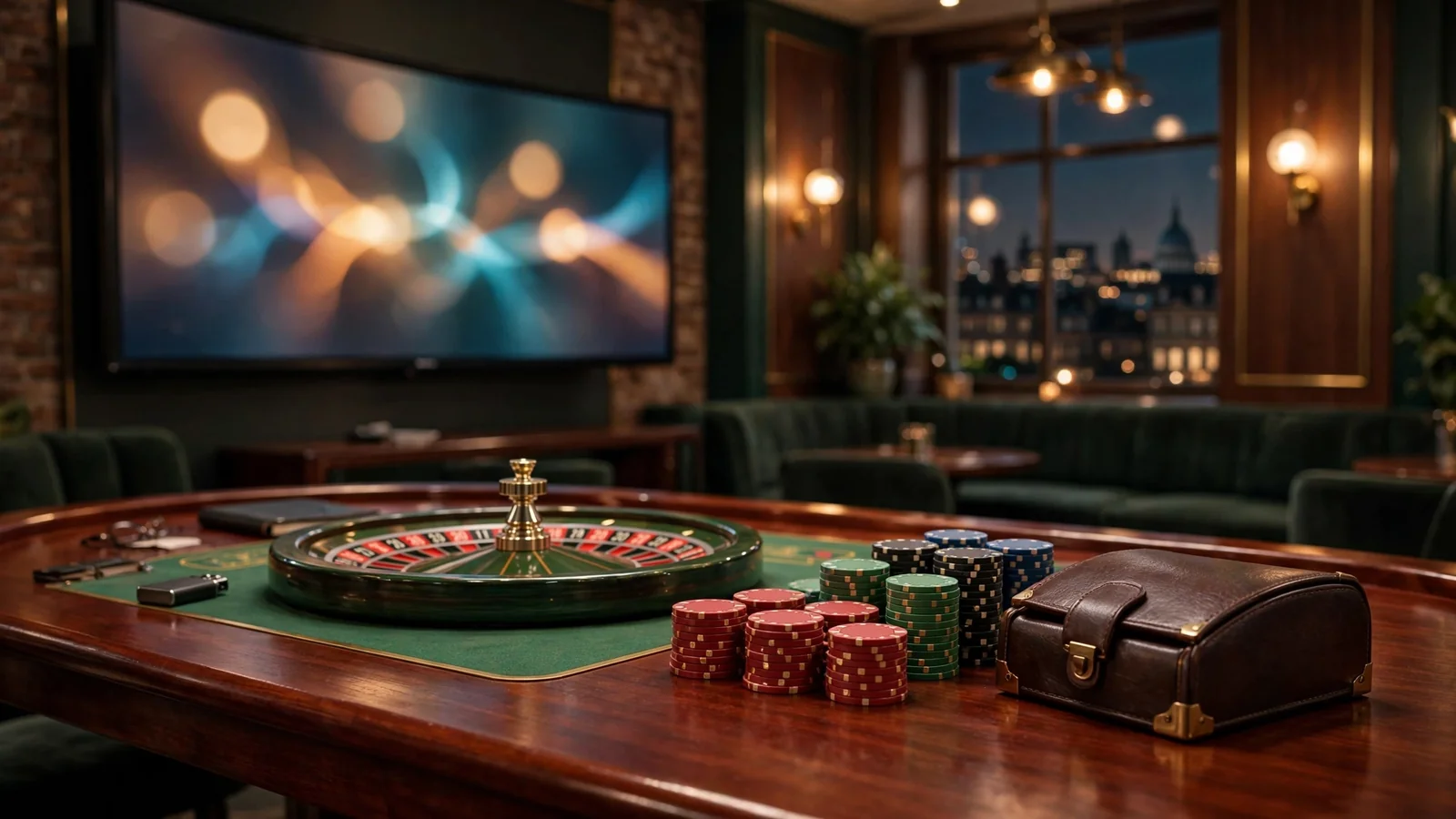
A craps table layout is not a cosmetic detail. It tells players where bets are placed, while chips provide the visible record of those wagers. But a familiar-looking screen is not enough to establish how a particular online game handles either.
I have learned to separate the image from the operating rules. A digital table may use chip-like controls or a layout resembling a physical surface; that alone does not confirm the available bet positions, chip values, placement rules or how a selection is recorded. Those details belong to the individual game and its rules, not to a general description of UK casinos.
The same caution applies to the word “standard”. It can sound like a promise that every interface works alike. It is not. Before treating a screen as self-explanatory, the game’s own instructions and displayed controls need to make clear what each selection does and how the stake is shown. If that explanation is unclear, the layout has not done its job.
The UK regulatory framework applies to remote gambling offered to consumers in Great Britain, and operators serving that market need the relevant UKGC licence. That identifies the regulatory setting; it does not certify a particular craps table design or chip system.
So claims about casino craps chips and layouts should be specific to a named, checked game. Without that, there is no sound basis for describing a UK interface as having a particular arrangement or set of chip options. Familiar appearance is not evidence.
What is the maximum I can stake on Amatic slots in the UK?
The maximum stake is £5 per game cycle for players aged 25 and over, and £2 for players aged 18 to 24. These UK online slot limits apply to Amatic slots as well.
What is the RTP of Book of Aztec and other top Amatic slots?
Book of Aztec has RTP versions of 90.57% and 97.63%. The same Amatic game can have different RTP versions at different casinos.
Are Amatic casinos on GamStop?
Amatic is a software supplier, not a consumer-facing casino. All online operators licensed in Great Britain have been required to participate in GamStop since 31 March 2020.
Prepared by the Grovers Casino editorial staff.