Casinos That Accept PayPal in the UK: What to Check
 Available in GB
Payment availability is separate from UK authorisation, and deposit methods can bring distinct limits, bonus terms and withdrawal requirements.
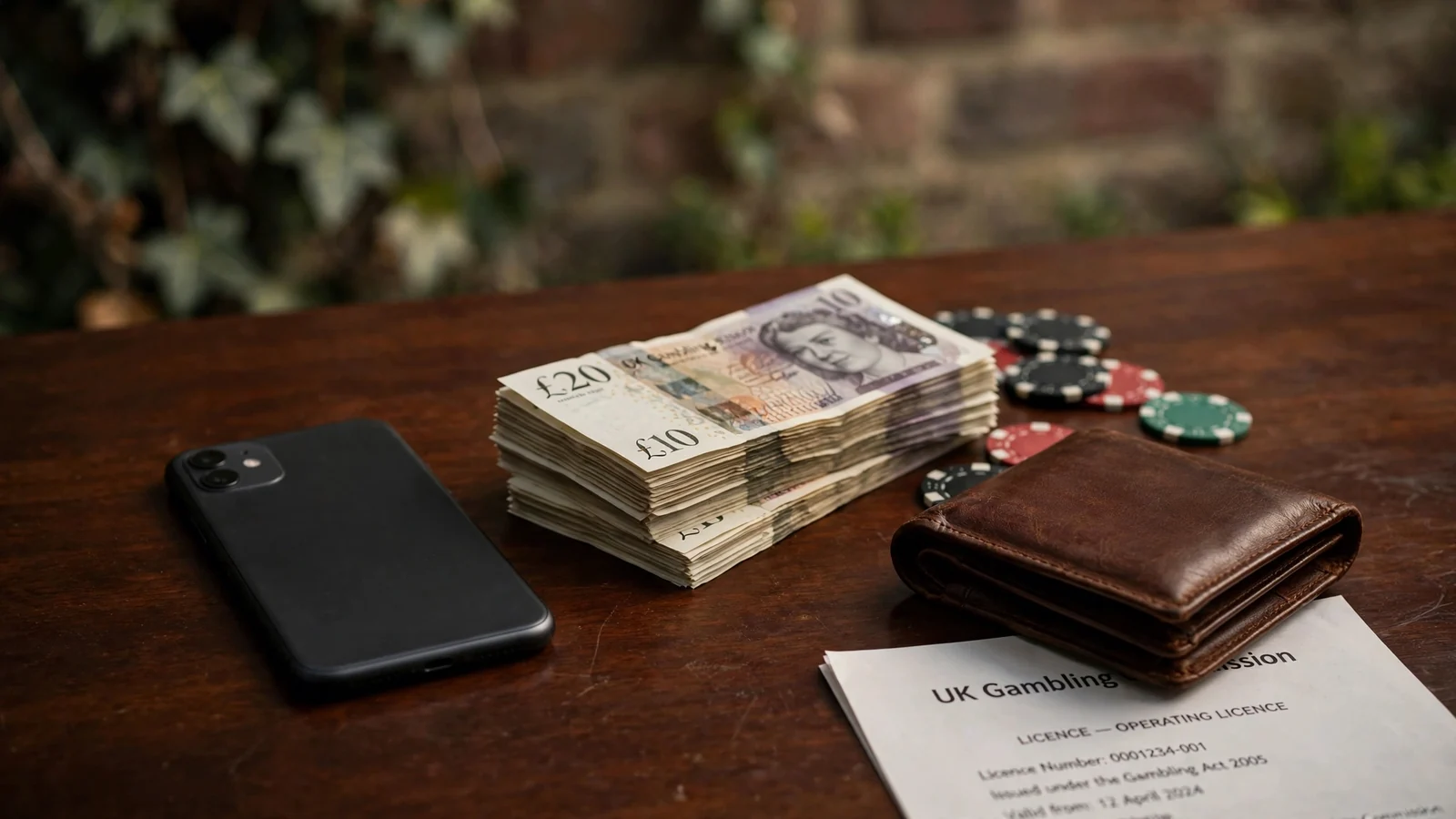
Table of Contents
- PayPal Availability Is Only One Part of a Casino’s UK Status
- When PayPal Is Unavailable, Payment Options Can Change
- How a Pay-by-Phone Casino Deposit Works
- Mobile Slots Still Follow Britain’s Spin Rules
- Real-Money Play Needs a Separate Withdrawal Route
- Deposit Limits, Phone Bills and Credit-Card Boundaries
- Pay-by-Phone Deposits and Welcome-Bonus Terms
- Using a Mobile Balance: PAYG and Supported Networks
- Funding Neteller Through Boku: A Different Route
- A PayPal Option Does Not Establish a Casino’s GamStop Status
PayPal Availability Is Only One Part of a Casino’s UK Status
A PayPal button in a casino cashier tells me something about how that operator accepts money. It does not, by itself, establish whether the casino is authorised to offer gambling to customers in Great Britain. Those are separate checks: one concerns a payment service, the other concerns the operator’s place within the country’s gambling regulatory system.
The relevant regulator for commercial gambling in Great Britain is the UK Gambling Commission. Its remit includes online casinos and other remote gambling offered to people in Great Britain. The location of the company’s offices or the equipment running its games does not, on its own, take that activity outside the Commission’s reach. The key point is where the gambling is offered, not simply where a server happens to sit.
That distinction matters because online operators may present themselves as international businesses. A website can be operated from elsewhere and still be offering remote gambling to consumers in Great Britain. In that case, the physical distance between the customer and the operator does not replace the licensing question. A payment brand is not a substitute for regulatory authorisation either.
What a gambling licence says
The Commission’s licensing system covers both businesses and people. A company needs the appropriate operating licence for the commercial gambling activity it provides, while individuals performing relevant operating roles may need personal licences. These are different forms of permission, attached to different responsibilities. Seeing a company name or a payment logo is not the same as establishing that the relevant business has the required authorisation.
I find it useful to separate the visible customer experience from the underlying permissions. A casino’s cashier is designed to show available ways to pay; it is not a reliable summary of the operator’s regulatory standing. The interface can look polished and familiar while still leaving the central question unanswered. Payment convenience and licensing are not interchangeable signals.
Grosvenor Casino Payment Methods UK
The UK Gambling Commission is the sole regulator for commercial gambling in Great Britain. That gives the licensing question a specific reference point: the Commission, rather than a payment provider or the casino’s own marketing language. When a site describes itself as serving British customers, the practical issue is whether the relevant gambling business falls within that system and holds the appropriate operating permission.
This is why searches for casinos that accept PayPal in the UK can mix together two different decisions. One is whether a particular casino makes PayPal available as a deposit option. The other is whether the operator is properly authorised for the market in which the gambling is offered. The first may change with a cashier update or a commercial decision. The second concerns the operator’s regulatory status.
A familiar wallet can create a false sense of reassurance. Payment services have their own commercial arrangements and controls; their presence does not amount to a UK Gambling Commission endorsement of the casino. Equally, the absence of a particular payment method does not answer whether an operator holds a gambling licence. The two systems serve different functions.
Casinos That Accept Klarna in the UK: Payment Guide
Keep the checks in the right order
In my experience of how operators structure their customer journeys, the cashier often attracts more attention than the legal identity behind the site. That is understandable: payment options are immediate and easy to compare. But a payment choice is only one feature of the account. It cannot establish which business is taking the bet, what permission that business holds, or whether that permission covers the gambling being offered.
The Commission’s role is not limited to land-based venues. Remote gambling aimed at consumers in Great Britain is within its regulatory scope even when the key equipment is located elsewhere. So a casino cannot be assessed solely by looking for a British address or assuming that overseas infrastructure means the British rules do not apply. The service offered to the customer is central to the question.
The word “licensed” is sometimes used in casino descriptions as though it were just another badge. In regulatory terms, it points to a formal permission held by a business, and the Commission also licenses individuals in relevant operating roles. It is not a quality rating for a payment method, nor a promise that every cashier option will remain available. Different questions need different evidence.
Do
- Establish the operator’s UK status first
- Consider payment options as a separate detail
Don’t
- Treat a recognisable payment brand as proof of licensing
- Assume a payment button equals a regulatory endorsement
For a person comparing PayPal casinos, the sensible sequence is therefore to establish the operator’s UK status first and consider the payment option separately. That avoids treating a recognisable brand in the cashier as proof of something it does not prove. The Commission regulates commercial gambling in Great Britain; PayPal availability is a payment detail within the broader picture.
A payment button is not a licence.
Our top casino picks for the UK
- DieselwinBonus: Welcome Pack 250% up to £4000 + 200 FS · Payout speed: 1-3 business days
- SpinFormulaBonus: 550% Up To £15,000 + 550 FS · Payout speed: 1-3 business days
- ChanzeBonus: Slots Welcome Bonus #1 200% up to €500 · Payout speed: 1-3 business days
- WinBeastBonus: €5000 + 500 FS + €650 Freebet · Payout speed: 1-3 business days
- EvoSpinBonus: 125% up to €2500 + 125 Free Spins · Payout speed: 1-3 business days
- x3betBonus: Welcome Pack 100% Up to £1.000 + 200 Free Spins · Payout speed: 1-3 business days
When PayPal Is Unavailable, Payment Options Can Change
A casino’s payment menu is not a permanent feature of its brand. Operators can add or remove methods as they reassess the compliance risk attached to offering them. That matters when comparing PayPal with Pay by Phone: the availability of one option does not tell much about whether another will remain in the cashier.
Boku is a clear example of a payment method whose position changed. There was no UK Gambling Commission rule specifically prohibiting casinos from accepting Boku. Individual operators made their own decisions to drop it in response to compliance risk. From the outside, the result can look like a sector-wide ban; from inside the business, it is a series of operator decisions that happen to point in the same direction.
That distinction is useful. A payment option disappearing does not, by itself, mean the regulator has ordered every casino to remove it. Nor does a method remaining available at one operator establish that other operators will keep it. The cashier reflects the decisions of the business running it, not a universal list of approved and prohibited payment brands.
A specialist payment review describes a shift away from Boku since 2023. In its account, some operators replaced it with Fonix or Siru Mobile, while others removed Pay by Phone altogether. These are different outcomes, not interchangeable names for one service. A casino that accepts a mobile payment through Fonix is not thereby accepting Boku; the method shown in the cashier is the one that matters.
POLi at UK Casinos: What the Cashier Can Confirm
The same review identifies MrQ and Duelz with Fonix, and Mr Vegas and Videoslots with Siru Mobile. Those examples illustrate how the payment mix can change, but they should be treated as a snapshot rather than a promise about what will appear at a later date. Operators can revise their options, and a payment brand’s continued presence at one site does not establish availability elsewhere.
This is why searches for casinos that accept PayPal can leave an incomplete impression of the cashier. PayPal is one payment route; Pay by Phone is another category, with its own providers and operator decisions. A site may change its mobile-payment provider without changing its PayPal option, or remove mobile payments while retaining other methods. The two questions need to be checked separately.
In my experience, payment pages are often presented as though the method list were part of the product’s fixed identity. It is not. A brand can keep the same games and account interface while its cashier changes. That change may be quiet: a method disappears, a replacement appears under a different name, or the category vanishes. There is no need for the operator to describe that as a major product change for the practical effect to be real.
The word “alternative” can also be misleading. It may suggest that Fonix or Siru Mobile is a direct substitute for Boku in every respect. The documented shift shows only that operators have moved towards those services or removed Pay by Phone; it does not establish that every service works identically or is offered on the same terms. The provider name is a starting point for checking, not a guarantee of a matching experience.
Operators may replace one mobile payment provider with another (e.g., replacing Boku with Fonix or Siru Mobile) or remove the category entirely based on their own compliance risk assessments.
A sensible comparison therefore begins with the actual cashier, not an old list of payment brands. The operator’s payment page or account cashier is the place to establish what it currently displays. If Pay by Phone is absent, that is not proof that the casino has stopped accepting PayPal; if a mobile-payment logo is present, it does not prove Boku is the provider. The names should not be blurred together.
The commercial logic is plain, even when the explanation is not. Operators make decisions about which payment services they are willing to support; the regulator did not issue a Boku-specific ban. Once a business judges a method’s compliance risk differently, its payment mix can change. Other operators may make another choice, which is why a once-familiar option can persist in a small part of the market while disappearing elsewhere.
There is no stable “best” payment mix that applies across every casino. PayPal availability answers one narrow question. The current presence of Boku, Fonix or Siru Mobile answers another. Treating them as the same feature obscures the change that has taken place: Boku has lost ground, some operators have shifted to other Pay by Phone services, and some no longer offer that route at all. The cashier tells the story.
How a Pay-by-Phone Casino Deposit Works
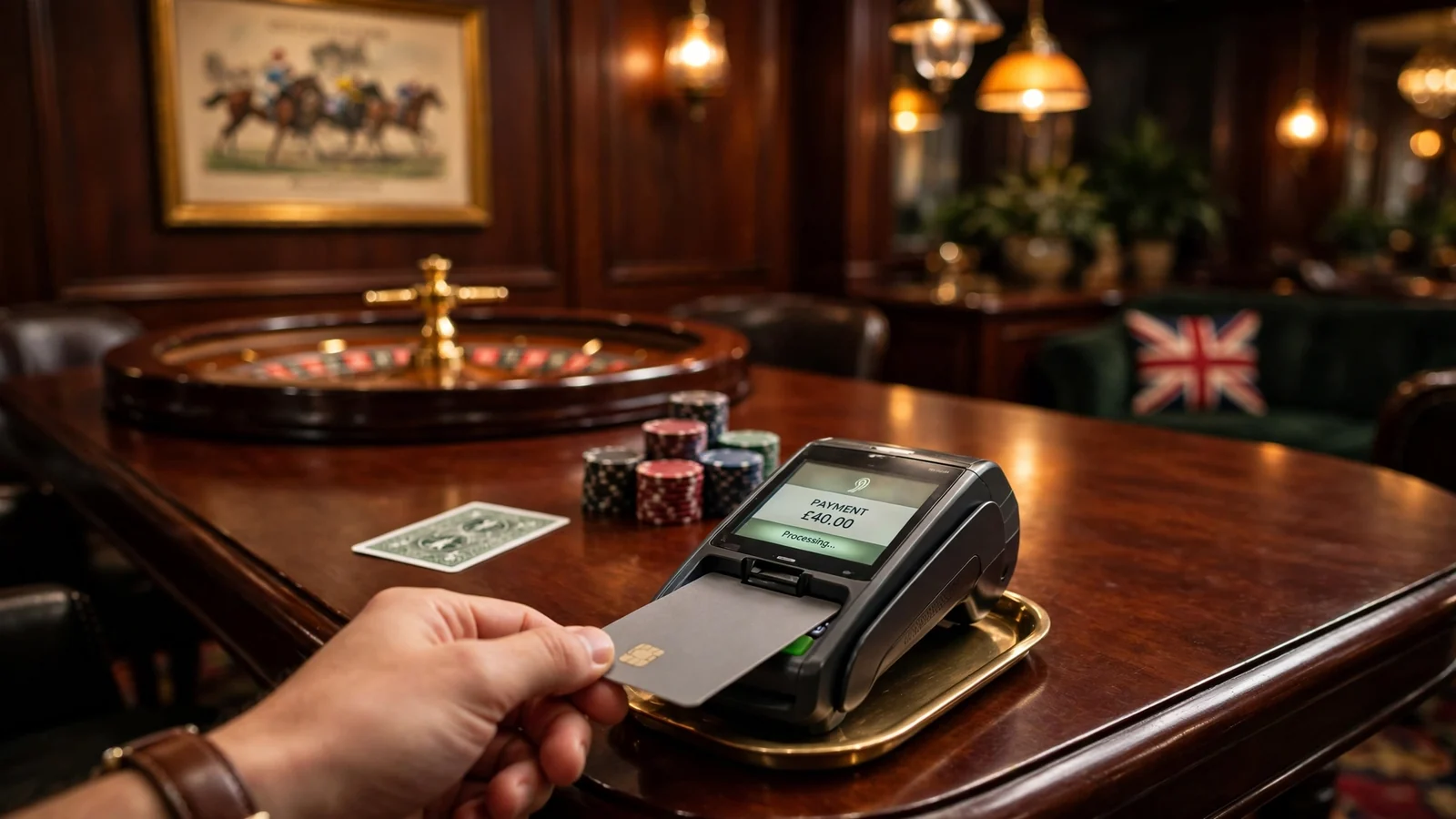
A Boku deposit starts in the casino’s cashier, where the payment methods available to that account are displayed. If Boku appears, selecting it opens the payment flow for a phone-billed deposit. The important distinction is that the phone number is not just a contact detail: it identifies the mobile account to which the transaction is charged.
Pay N Play Casinos in the UK: How Boku Works
The sequence is short: choose Boku, enter the deposit amount and mobile number, then confirm the payment with the verification code sent by SMS. The code is the final check that the person initiating the transaction can receive messages on that number. Until it is entered and accepted, the deposit has not been confirmed through this flow.
That is the working shape of the transaction. The casino cashier collects the requested amount and number; the SMS step confirms the request. It is not the same process as entering card details or signing in to an e-wallet. There is no card number to type into the Boku form. The payment is associated with the phone account instead.
Amount selection can depend on the options shown in the cashier. A specialist review describes Boku deposits as being available only in amounts divisible by ten, with £10, £20 and £30 given as examples. Because payment arrangements can change, the cashier’s live options are the practical reference; that review should not be treated as a universal promise about every operator.
What happens on screen
A typical sequence looks like this:
- Open the casino cashier and select Boku, if it is offered.
- Choose an amount from the options presented.
- Enter the mobile number to be billed.
- Receive an SMS verification code and enter it to confirm.
The exact wording and layout belong to the operator’s cashier, so buttons may not carry identical labels from one site to another. The underlying steps remain recognisable: method, amount, phone number, confirmation. If the cashier does not show Boku, there is no Boku transaction to complete there, even if the method is available elsewhere.
I pay attention to the number entered before confirming. A mistyped digit can direct the confirmation request to the wrong phone, leaving the intended transaction incomplete. The SMS code is also not a promotional code or a casino login password; in this flow, it is used to approve the payment request. The distinction matters because the screen can move quickly from entering details to asking for confirmation.
The casino account and the phone account each have a role. The casino cashier records the requested deposit against the player’s gambling account, while the phone number identifies the mobile account involved in billing. Boku therefore offers a route that does not require a payment card in the cashier. It still depends on access to the phone and the ability to complete the SMS confirmation.
Boku Deposit Process
Step 1: Selection
Open the casino cashier and select Boku as the payment method.
Step 2: Details
Choose the deposit amount from the available options and enter the mobile number to be billed.
Step 3: Confirmation
Receive an SMS verification code on the mobile phone and enter it to confirm the transaction.
In practice, the point at which a deposit succeeds is not merely the moment Boku is selected. The amount and number must be entered, and the SMS confirmation must be completed. A player who closes the page or leaves the code step unfinished has not followed the full transaction sequence. The cashier should be checked for the resulting account balance rather than assuming that choosing the method alone completed the deposit.
This is a direct, phone-based payment flow, with a clear confirmation step. No card form. No wallet sign-in. Just the cashier, the mobile number and the SMS code.
Mobile Slots Still Follow Britain’s Spin Rules
A slot game does not escape Britain’s rules when it moves from a desktop screen to a phone. The same controls apply to online play, whether a game is opened in a browser or through a casino app. In practice, that changes the rhythm of play: two familiar features are not available in the way they may be on other markets.
Autoplay is prohibited for online slots in Britain. A player must initiate each spin rather than set a sequence to run on its own. The rule applies to the game, not to the device, so a mobile interface cannot add an autoplay button simply because the screen is smaller or the controls are arranged differently. I have seen design teams treat this as a product detail; it is a compliance boundary.
Casinos That Accept Upaycard in the UK: What to Check
The pause between spins is regulated too. Each online slot spin must take at least 2.5 seconds. That is a minimum duration, not a promise that every game will take exactly that long. A slot may run more slowly because of its animation or presentation, but it cannot compress a spin below the required interval. No instant repeat.
These requirements matter when assessing what a mobile slot actually offers. A fast-tapping interface can make play feel immediate, but it cannot remove the required interval or automate successive spins. The buttons, animations and sound may differ between games; the underlying restrictions do not. A game that presents itself as a mobile version still has to follow the same spin rules.
The rules also sit apart from payment choices. A casino may display a particular way to fund an account, but that does not determine how its slots are allowed to operate. The play controls are governed by the requirements for online slots in Britain, not by whether the deposit came from an e-wallet, a card or another method. Different question. Different control.
Spin Rules
Autoplay is prohibited for online slots in Britain, and every spin must last at least 2.5 seconds.
That distinction is useful because casino pages often bundle the experience into one “mobile” feature. In operational terms, the label covers several separate systems: the cashier, the account, and the game itself. Payment availability tells little about the mechanics of a slot session. Autoplay remains banned, and every spin must last at least the required minimum.
For anyone comparing online slots on a phone, the practical expectation is straightforward: each spin is a separate action, and the game cannot move faster than the rule permits. A mobile layout may make the controls easier to reach, but it does not change the permitted pace. The screen gets smaller. The rules do not.
Real-Money Play Needs a Separate Withdrawal Route
A payment method that puts money into a casino account does not necessarily provide a way to take winnings out. Boku is a clear example: it can be used to deposit, but it cannot receive a casino withdrawal. The phone bill is the funding source, not a destination for casino funds.
That distinction is easy to miss when a cashier presents payment methods together. “Pay by Phone” describes how a deposit is made; it does not mean that the same route works in reverse. In practice, a player funding an account with Boku must register another withdrawal method, such as a debit card, an e-wallet or a bank transfer.
I have seen this mismatch treated as a minor cashier detail. It is not. A deposit method answers one question — how funds reach the account — while a withdrawal method answers another: where the operator can send a payable balance. Boku handles only the first.
Casinos That Accept Giropay in the UK: What’s Verified
The alternative needs to be available in the casino account and suitable for withdrawals. A method shown among deposit options should not be assumed to work for cashing out. Before depositing, the account’s cashier and payment terms are the places to establish which withdrawal routes the operator supports. That check matters whether the original deposit was made by phone, card or wallet.
This also changes how “real-money” play should be understood. A successful deposit can make funds available for play, but it does not establish that a complete route back to the player is in place. With Boku, the cash-out route is separate from the outset. The casino balance and the phone account are not interchangeable.
The same point applies when someone is comparing casinos that accept PayPal or looking for slots funded through another method. The label on a deposit option tells only part of the story. What matters for money in and out is whether the operator supports a usable withdrawal method on the account. Boku itself is not that method.
There is no workaround in asking the casino to send winnings back through Boku: it does not support casino withdrawals. The practical arrangement is therefore two-part — Boku for depositing, and a separately registered debit card, e-wallet or bank transfer for withdrawals. If that second route has not been set up, the payment plan is incomplete.
Withdrawal Limitation
Boku can be used to deposit funds, but it cannot be used to receive casino withdrawals.
I would treat the withdrawal option as part of the initial payment decision, not as an administrative step to sort out after a win. A cashier can make deposits look straightforward while leaving the exit route less visible. With Boku, that separation is built into the method. Money in, another route out.
Deposit Limits, Phone Bills and Credit-Card Boundaries
Boku limits are not reported consistently, so a single figure should not be treated as a fixed rule across UK casinos. One specialist review gives £30 as the standard maximum for a transaction and says some casinos or mobile operators may permit £40 or £50. Other reporting describes a £30 daily ceiling at network level without specifying a per-transaction cap. Those accounts do not establish the same limit: one concerns a stated transaction maximum, while the other describes a daily allowance.
The distinction matters at the cashier. A casino may set the amount it will accept for a deposit, but that does not necessarily determine how much can be billed through the phone account over the day. A specialist review attributes the daily Boku restriction to the mobile operator rather than the casino. In practice, an attempted payment can therefore be refused because of a network-side limit even when the casino cashier appears to allow the amount. The operator controls that boundary.
I have seen payment limits treated in promotional copy as if they were simple casino settings. They are not always. With Pay by Phone, the mobile billing arrangement adds another party, and its controls can sit outside the gambling account. The published cashier limit and the amount available through the phone network are separate checks.
Casinos that accept iDEAL in the UK: payment checks
Credit-card rules are a different boundary altogether. UK-licensed casinos cannot accept credit-card payments for gambling. The restriction also applies when credit-card funds are routed through a money service business to reach the gambling account; changing the route does not make the underlying credit funding acceptable. A card’s presence in a payment chain is not enough to determine whether it can be used: the source of the funds matters.
That also limits what a PayPal balance can mean in this context. A PayPal payment option does not make credit-card-funded gambling permissible if the wallet allows credit-card funds to be used for the transaction. Operators cannot accept wallet payments where that credit-card funding can be used for gambling. PayPal availability, a casino’s own deposit ceiling and a mobile operator’s Boku limit are separate questions—not interchangeable ways around one another.
The useful check is the payment method’s stated cap and the billing route behind it. On Boku, the network may impose its own ceiling. On a credit card, the UK rule is categorical. Different controls. Different reasons.
Casinos That Accept Solana in the UK: Payment Checks
Pay-by-Phone Deposits and Welcome-Bonus Terms
A payment method appearing in a casino cashier does not, by itself, make a deposit eligible for a welcome offer. The promotion rules decide that. Operators set their own conditions, and the payment method can be treated differently from the account’s other deposits.
I have seen this distinction cause avoidable confusion: a deposit can reach the account successfully while still not counting towards a promotion. “Eligible” is a term with a narrow meaning. It refers to whether that particular transaction satisfies the bonus terms, not whether the casino accepts the payment method.
Pay-by-Phone deposits are commonly excluded from welcome offers, so the terms need checking before a deposit is made. Look for wording about payment methods and qualifying deposits, rather than relying on a general banner promising a welcome bonus. A promotion may also have separate conditions for claiming it and for using its bonus funds. The cashier and the promotion page answer different questions.
Bonus Eligibility
Payment acceptance and bonus eligibility are separate decisions; Pay-by-Phone deposits are commonly excluded from welcome offers.
For Boku specifically, a specialist casino review reports that deposits generally came without a dedicated Boku bonus; it also found no Boku-specific deposit restrictions at the platforms it evaluated. That is not a promise that every operator treats Boku the same way, or that its current terms have not changed. The practical point is that acceptance of Boku and bonus eligibility are separate decisions.
There are documented exceptions among other Pay-by-Phone options. A specialist review identifies MrQ and Duelz, which accept Fonix, and Mr Vegas and Videoslots, which accept Siru Mobile, as operators where Pay-by-Phone deposits are accepted for bonus eligibility. This does not make every promotion available through every payment route: the particular offer’s terms still govern.
I would treat a bonus code or welcome banner as an invitation to read the conditions, not as confirmation that a chosen deposit method qualifies. Check the payment-method exclusions for the specific promotion, and make sure the relevant method is named or otherwise permitted. If the wording is unclear, the operator’s support team can clarify how that offer handles the deposit before it is made.
The distinction is simple, but consequential: payment acceptance gets funds into an account; promotion terms determine whether those funds count towards an offer. Eligibility is operator-specific.
Using a Mobile Balance: PAYG and Supported Networks
With Boku, the money comes from the mobile account rather than a bank card. On a contract plan, the deposit is charged to the monthly phone bill. On a pay-as-you-go (PAYG) plan, it is taken from the credit already on the handset’s account. The route therefore depends on how the mobile service is paid for, not simply on whether the phone can receive a text.
Casinos That Accept AstroPay in the UK: What to Check
That difference matters at the point of payment. A contract customer sees the cost on the network bill; a PAYG customer spends from a finite balance. A specialist review describes the PAYG condition plainly: a Boku deposit cannot be greater than the credit remaining on the phone. If the balance is insufficient for the chosen amount, the transaction cannot be covered from that source.
This is separate from the casino’s cashier. The cashier presents a payment option, but the mobile operator supplies the billing or prepaid balance behind it. A displayed Pay by Phone method does not mean that every network account will be able to fund a deposit. Account type and available credit still matter.
The names behind these options can also differ. Pay by Phone and Fonix are available through EE, O2, Vodafone and Three. That overlap does not make the services interchangeable: the casino may identify one method by its own name, while the charge is still routed through a supported mobile network.
In practice, the useful distinction is between a billable contract and PAYG credit. One places the charge on the mobile bill; the other draws on funds already held with the network. Neither changes the basic role of the phone account: it is the funding source for the transaction, rather than a casino balance or a separate e-wallet.
I have seen payment pages make this look like a single, universal mobile option. It is not. The label can be familiar, but the funding arrangement underneath decides whether the deposit can proceed. A small distinction, with a real effect.
PAYG vs Contract
On a contract plan, the deposit is charged to the monthly phone bill. On a pay-as-you-go (PAYG) plan, the deposit is taken from the existing credit on the handset’s account, meaning the deposit cannot exceed the remaining credit.
Funding Neteller Through Boku: A Different Route
For someone looking for a PayPal alternative, a specialist payment-method review describes an indirect route: use Boku to fund a Neteller account, then deposit from Neteller at a casino that accepts that wallet. It is not the same as selecting Boku in the casino cashier. The phone-billed payment goes to the wallet first; Neteller is the payment method presented to the casino.
That distinction matters. A casino accepting Neteller does not, by that fact alone, accept Boku. Nor does the route establish that every Neteller account can be funded this way. The available description is specific, so I would treat it as an option to verify rather than a standard feature of either service. Payment menus can differ between operators, and a wallet’s available funding routes can depend on the account and service conditions.
The practical sequence is therefore conditional: Boku must be offered as a way to add funds to Neteller, and the chosen casino must allow Neteller deposits. If either part is unavailable, the chain stops. There is no reason to assume the casino will see or treat the original Boku payment as its own deposit method; it receives a Neteller payment instead.
This can be useful where direct PayPal funding is not available, but “alternative” describes the route, not a promise of equivalent handling. Before relying on it, the relevant Neteller funding options and the casino’s cashier should both be checked. The casino must also hold a current UK Gambling Commission operating licence for legal online gambling in Great Britain; its licence number can be checked on the Commission’s public register.
I would keep the records straight as well: the mobile payment funds the wallet, and the wallet funds the gambling account. Those are separate transactions, with separate terms. That is the whole workaround.
Casinos That Accept Entropay in the UK
A PayPal Option Does Not Establish a Casino’s GamStop Status
A casino’s payment menu and its self-exclusion arrangements answer different questions. Seeing PayPal available does not establish whether a site is connected to GamStop, just as seeing Pay by Phone does not tell me how the operator handles a customer who has chosen to exclude themselves. Payment availability is not evidence of self-exclusion status.
The distinction matters because a cashier is a commercial and compliance decision. Operators can add or remove payment methods as they reassess the risks involved. Boku’s decline illustrates the point: a small number of UK Gambling Commission-licensed casinos still take Boku deposits, but the number has fallen since 2023. The Commission did not introduce a rule banning Boku by name. Individual operators moved away from it because of their own compliance concerns.
That history should not be turned into a shortcut for judging a casino’s relationship with GamStop. A payment brand cannot confirm that relationship, and the absence of a particular method cannot confirm it either. Different decisions, different systems.
Casinos That Accept Visa in the UK: Payment Guide
I have seen payment pages treated as if they were a proxy for a wider compliance check. They are not. For a UK-facing casino, the first separate check is whether the operator holds a current UK Gambling Commission licence; the licence number can be checked on the Commission’s public register. That establishes the operator’s licensing position, not every detail of its self-exclusion arrangements.
GamStop status needs its own verification through reliable information about the operator and the scheme, rather than inference from a PayPal button or another deposit option. If a person has registered with GamStop, searching for payment methods at other casinos is not a safe substitute for respecting that exclusion. Licensed operators must provide self-exclusion tools, but the presence of a tool does not establish a particular casino’s GamStop connection.
The same caution applies to labels such as “not on GamStop”: they describe a separate status, not a payment feature, and should not be inferred from a cashier. I keep the checks apart: licence, payment method and self-exclusion status. One does not prove the others.
What are the deposit limits at pay-by-mobile casinos?
Boku deposits are usually limited to £30 per transaction, though some casinos or mobile networks may allow up to £40 or £50. Network-level limits are typically about £10 per transaction and £30 per day, and PAYG users cannot deposit more than their remaining phone balance.
Are Boku casinos still available in the UK in 2026?
Yes, a small number of UKGC-licensed casinos still accept Boku, although the list has been shrinking since 2023.
Are there any Boku casinos left in the UK?
Yes. Jackpot Mobile Casino and Peachy Games are among the remaining direct-Boku sites.
What is the best alternative to Boku for casino deposits?
Fonix and Siru Mobile are pay-by-mobile alternatives used by some casinos. You can also use Boku to fund Neteller, then deposit at a casino that accepts Neteller.
Why are UK casinos dropping Boku?
Operators have dropped Boku because of compliance risk; the UK Gambling Commission did not introduce a specific rule banning it.
Published by the Grovers Casino team.