Non-UK-Regulated Casinos: UK Licensing Explained
 Available in GB
The key distinction is whether an operator is licensed to serve Great Britain, not where its offices or servers are based.

Table of Contents
- What a UK Gambling Commission Licence Actually Covers
- The Legal Position for UK Players and Offshore Operators
- What “Non-UK-Regulated” Means in 2026
- Non-UKGC Casino Sites: Where the Safeguards Thin Out
- Bonuses, Wagering Terms and the Cost of “Free” Spins
- Payments at Offshore Casinos: More Routes, More Uncertainty
- Curaçao, Anjouan and Other Licences Outside the UK
- How Slot Machines Fit into Casino Regulation
- Checking an Anjouan Casino Licence Before Trusting It
- GamStop, Player Protection and What Offshore Play Removes
What a UK Gambling Commission Licence Actually Covers
An online casino can be open on the internet without being authorised to serve customers in Great Britain. That distinction is the starting point for understanding a UK Gambling Commission licence. A website’s availability, polished design or ability to accept an account registration does not itself establish that the operator is licensed for the British market.
The relevant point is who the operator serves, not simply where its offices or servers are based. Operators serving customers in Great Britain need a licence from the UK Gambling Commission even when the business is based elsewhere. In other words, a company cannot avoid the market’s licensing requirement merely by running its casino from another country.
I find it useful to separate three ideas that marketing often runs together: being online, holding a licence somewhere, and being licensed to serve a particular market. They are not interchangeable. A casino may operate online and may have authorisation from a regulator outside the UK, but neither fact makes it a UK Gambling Commission-licensed casino. For the British market, the relevant status is a current operating licence from the Commission.
The licence is about the operator
The licence relates to the business providing the gambling service. It is not a general certificate attached to the internet address, nor does a site become regulated simply because it features familiar games or has a professional-looking customer account area. The company operating the service is the key point.
That distinction matters because a casino’s public-facing brand and the company behind it are not always described in the same way. A name on a homepage may be a brand, while the licensed operator is a legal entity. When checking whether a casino is UK-regulated, the useful question is whether the operator serving the market holds the relevant UK Gambling Commission licence—not whether the site uses the words “licensed” or “regulated” somewhere in its promotional copy.
Casino Guides for UK Players: Licensing and Access
This is also why the location of a business does not settle the question. A company based outside Britain can still need a UK licence if it serves customers here. Conversely, having a licence issued in another jurisdiction does not make that authorisation equivalent to a UKGC licence. The licence has a defined regulatory source and market context.
“Operating online” is not a regulatory status
The word “online” describes how a service is delivered. It says nothing, by itself, about which regulator oversees the operator or which market the operator is authorised to serve. A casino can have a functioning website, take registrations and display a range of games while remaining outside the UK Gambling Commission’s regulatory system.
That is the difference between access and authorisation. A page loading in a British browser is evidence that the page is reachable; it is not proof that the operator has permission to serve the British market. Nor is a payment option or a customer-support channel proof of UK regulation. Those are features of a service, not the licence that defines its regulatory position.
The distinction is less visible than many players expect. From the front end, two casinos can look much alike: both may have account pages, games and promotional banners. The regulatory difference sits behind that interface, in the identity of the operator and the authority under which it serves customers. Appearance is a poor substitute for checking the actual status.
What the UKGC reference point means
For customers in Great Britain, the UK Gambling Commission is the regulator whose licence establishes that an operator is authorised to provide gambling services in that market. The licence is not simply a badge saying that the casino exists, has a website or has passed a vague quality test. It identifies a relationship between the operator, the regulator and the market being served.
That is the practical reference point when comparing UK regulated online casinos with sites regulated elsewhere—or with sites that do not have UKGC oversight. “Licensed and regulated” only answers a useful question when the licensing authority is clear. A statement that a casino is licensed, without saying by whom and for which market, leaves the central issue unresolved.
Attention: A foreign licence is not a substitute for British authorisation and does not change the UK requirement for operators serving Great Britain.
I would not read a foreign licence as a substitute for British authorisation. It may indicate that another jurisdiction has a framework for the operator, but it does not change the UK requirement for operators serving Great Britain. The regulator named in a site’s terms therefore matters more than broad wording such as “internationally licensed”. Specificity matters.
This is also why the phrase “online casino licensed and regulated” needs a market attached to it. Licensed where? Regulated by which authority? Without those details, the phrase can sound more reassuring than it is informative. A UKGC licence is the relevant marker for a casino serving Great Britain; a licence from somewhere else describes a different regulatory arrangement.
A careful way to assess the claim
The basic check is not complicated in principle. The operator named in the casino’s legal information should be identifiable, and its claimed UK Gambling Commission status should correspond to that operator. A brand name alone may not tell the whole story, especially where the legal company name differs from the name used in advertising.
The same care applies to wording on the site. “Available in the UK” is not the same as “licensed by the UK Gambling Commission”. “Regulated” without a named regulator is incomplete. And an operator’s base of operation does not decide whether the UK requirement applies: serving customers in Great Britain is the key condition.
Non-UK Registered Casinos: What the Label Means
I see the licence as a boundary, not a decorative seal. It distinguishes an operator authorised for the British market from one that merely happens to be reachable online. That is the standard against which claims about UK regulation should be read.
The difference is structural. One status concerns permission to serve a market; the other may describe only that a website operates or holds authorisation elsewhere. Keeping those meanings separate prevents a common mistake: treating every casino with a licence, or every casino that can be opened in a browser, as a UK-regulated service.
The Legal Position for UK Players and Offshore Operators
The legal distinction is between the business supplying gambling and the person placing a bet. The Gambling Act 2005 is directed at operators making gambling services available in the British market. It does not make an individual player the target of the same licensing duty. That difference is easy to lose in broad statements about “illegal casinos”, which can make operator regulation sound like a criminal rule for customers.
An operator serving customers in Great Britain needs the relevant UK Gambling Commission licence, wherever its business is based. A company does not avoid that requirement simply by running its website or holding a business address abroad. The test is the market it serves, not the location from which its staff or servers operate. A foreign licence may authorise activity under another jurisdiction’s rules, but it does not replace the UKGC permission required to supply the British market.
The Gambling Act 2005 applies in England, Wales and Scotland, but not Northern Ireland.
The individual position is different. British law does not expressly bar a citizen from using a gambling service licensed in another country, and a player who uses a site without a UK licence does not commit a criminal offence under UK law. That does not make the operator’s position equivalent to that of a UKGC-licensed business. The obligation to hold the local licence remains with the operator supplying the market; it is not transferred to the customer.
I find that separation important because “available to UK players” describes access, not authorisation. A site may accept registrations or wagers from people in Britain while lacking permission to serve the British market. Its willingness to take a customer does not demonstrate that it has met the UK licensing requirement. Nor does the customer’s ability to reach the site settle the question of the operator’s regulatory status.
There is also a limit to the phrase “UK law”. The Gambling Act 2005 applies in England, Wales and Scotland, but not Northern Ireland. It is therefore imprecise to treat that Act as a single rule covering every part of the United Kingdom. The broad distinction remains useful: the statutory licensing duty described here concerns operators supplying the relevant market, while the stated UK position does not make a player’s use of an unlicensed site a criminal offence. The territorial scope still matters when describing which law applies.
This is not a recommendation to use non UK regulated casinos accepting UK players. Legal exposure for the individual and regulatory permission for the operator are separate questions; answering the first does not answer the second. A site’s terms may also set out restrictions on where it accepts customers, so its own position cannot be inferred solely from a player’s location or from the presence of a foreign licence.
Non-Gamban Casinos UK: What the Label Means
The phrase “not a crime for the player” is narrower than “fully legal in every sense”. It describes the absence of a player offence under the UK position set out here. It does not grant an overseas operator a UKGC licence, create approval for its service in Britain, or turn a foreign authorisation into a British one. Those are questions about the supplier and the market, not about whether the customer faces criminal prosecution.
That distinction also explains why offshore casinos for UK players are discussed differently from licensed British operators. An individual may not commit an offence by gambling through an overseas service, while the business remains subject to the requirement to obtain a UK licence when it supplies customers in Great Britain. The two statements can both be true. They concern different parties and different duties.
In short, access and authorisation are not interchangeable. The player’s legal position is not the operator’s licence status. The boundary is clear.
What “Non-UK-Regulated” Means in 2026
A non-UK-regulated casino is an online gambling site that operates without oversight from the UK Gambling Commission (UKGC). The label describes the casino’s regulatory status in relation to the UKGC; it does not, by itself, tell us whether the operator holds a licence somewhere else.
That distinction is easy to miss in advertising. “International” can sound like a description of a broad, neutral market, while “licensed” can sound complete. Neither word identifies which authority supervises the operator. The useful question is narrower: is the casino under UKGC oversight, or does it rely on a licence issued in another jurisdiction?
In my experience, licence language is often placed beside a regulator’s name or badge as if the badge settles the matter. It does not. The jurisdiction named on a site tells us where its stated licensing framework comes from; it does not turn that framework into UKGC oversight. Those are separate descriptions.
Malta
One of the common licensing jurisdictions for non-UK-regulated casinos.
Curaçao
A jurisdiction often associated with operators outside the UKGC oversight.
Gibraltar
Another common licensing framework used by non-UK-regulated sites.
Anjouan
A licensing jurisdiction whose framework does not authorize serving restricted markets like the UK.
Where these licences may come from
Non-UK-regulated casinos are commonly associated with licensing jurisdictions such as Malta, Curaçao, Gibraltar and Anjouan. These places are not interchangeable labels for one shared system. Each name points to a different licensing jurisdiction, and the presence of one of them does not mean that the casino is regulated by the UKGC.
This is why I treat “non-UK-regulated” as a category, not a quality rating. It says what is absent: UKGC oversight. It does not, on its own, establish how a particular operator is supervised elsewhere or how its licence works. Those details belong to the relevant licensing framework, not to the broad label.
The casino’s location can also be a distraction. An operator may be based in one place and hold a licence associated with another. For the meaning of this term, the decisive point is not the address printed on a website but the absence of UKGC oversight. “Based abroad” and “licensed abroad” are not definitions of the same thing.
What the label does—and does not—tell us
The phrase is useful because it separates UKGC-regulated casinos from sites operating outside that regulator’s oversight. It is not a synonym for “unlicensed”: a site may have a licence from another jurisdiction while still being non-UK-regulated. Nor does the phrase identify a single type of casino, since operators can be associated with different licensing jurisdictions.
VPN-Friendly Casinos in the UK: Access and Risks
I would not read a foreign licence name as proof that a casino has UKGC approval, or assume that every site in this category shares the same regulatory arrangements. The label gives a starting point for understanding who is not overseeing the operation. The jurisdiction named by the operator supplies a different piece of information. Keeping those two points separate avoids a common bit of industry shorthand: using “licensed” as though it answered every question.
Our top casino picks for the UK
- DieselwinBonus: Welcome Pack 250% up to £4000 + 200 FS · Payout speed: 1-3 business days
- SpinFormulaBonus: 550% Up To £15,000 + 550 FS · Payout speed: 1-3 business days
- ChanzeBonus: Slots Welcome Bonus #1 200% up to €500 · Payout speed: 1-3 business days
- WinBeastBonus: €5000 + 500 FS + €650 Freebet · Payout speed: 1-3 business days
- EvoSpinBonus: 125% up to €2500 + 125 Free Spins · Payout speed: 1-3 business days
- x3betBonus: Welcome Pack 100% Up to £1.000 + 200 Free Spins · Payout speed: 1-3 business days
Non-UKGC Casino Sites: Where the Safeguards Thin Out
The difference between a payment marked “approved” and money reaching an account is where the operating rules become visible. At a non-UKGC-regulated casino, a withdrawal can depend on internal checks, the payment route and the operator’s own processing decisions. The important distinction is that a delay does not necessarily trigger a UK regulatory deadline or an equivalent route for forcing the payment through.
Published accounts do not agree on how long withdrawals take. Some describe payments arriving within 24 hours to 5 business days; others report waits of up to three or four weeks. Those accounts cannot be reconciled into a dependable timetable. The method used and the operator’s handling may matter, but the practical exposure is the gap between a fast best-case account and a much longer reported delay—with no regulatory clock to compel resolution.
Withdrawal Risks
At non-UKGC casinos, withdrawals may be subject to internal checks and lack a regulatory deadline to compel payment resolution.
I would read a stated processing time as an estimate, not a promise. A withdrawal may remain pending while the operator asks for further information, and a request for documents can reset the practical sense of when processing has begun. That matters most after a win: the balance displayed on screen is not the same as cleared funds. Terms that leave room for additional checks can turn a routine request into a drawn-out exchange.
The checks themselves can be more demanding than the initial account process suggests. A specialist review has reported cases in which an operator requested notarised documents or a video call before releasing a withdrawal. That is a reported practice, not a standard requirement across non-UK-regulated casinos. Still, it shows why “verification complete” at sign-up should not be taken to mean that no further evidence can be requested later. The withdrawal stage is when identity, payment ownership or account details may be examined again.
Limits can also affect the route from balance to cash. A specialist review has reported operators applying daily, weekly or monthly withdrawal ceilings, so a large win may need to be paid in instalments rather than as one transfer. This is not a universal feature, and such conditions can change. It is a reason to look for the withdrawal rules themselves, rather than relying on a headline promise of quick cash-outs. Fine print matters.
When a payout stalls, the operator’s support team is often the immediate point of contact. That does not make the process independent: the same business that holds the account sets out the steps and responds to the complaint. Records of requests, responses and status changes can help establish what happened, but they do not guarantee a particular outcome.
The operational risk is not simply “slow payments”. It is uncertainty about timing, the possibility of repeated checks, and, in some reported cases, staged withdrawals. A casino may describe these controls as routine security. In practice, their effect is to leave the player waiting while the operator decides whether its requirements have been met. That is the thin point.
Bonuses, Wagering Terms and the Cost of “Free” Spins
A welcome offer is not a cash balance. In the terms, it is a conditional credit: the casino sets what must happen before any resulting winnings become withdrawable, which games count, and when the offer ends. I learned to read the calculation before the headline. “Free” describes the entry price, not necessarily the conditions attached to the winnings.
The key phrase is the wagering requirement. It tells the player how much qualifying stake must be placed before the bonus can be converted. A specialist review reports offshore welcome offers with requirements of 35 times the bonus or more, but terms vary by operator and promotion. The multiplier alone does not tell the whole story. A requirement of 40 times may be calculated on the bonus, the deposit and bonus together, or a combined bonus-and-free-spins award. Those bases produce very different totals, so the wording matters more than the large number in the banner.
Do
- Check the exact wagering base
- Verify eligible games
- Look for winnings caps
- Review the expiry rule
Don’t
- Trust the headline figure alone
- Assume “free” means unrestricted
- Ignore the small print
- Overlook the wagering multiplier
A simple illustration shows why. If a requirement applies to both deposit and bonus, the amount to be wagered is larger than if the calculation uses the bonus alone. The offer may also specify which games contribute, or how much each game contributes. A player can spend time playing and still make less progress than expected if the chosen game does not count fully. The interface may display a progress bar; the terms determine what that bar measures.
That is the mechanic behind “up to”. The maximum advertised bonus can depend on depositing a particular amount, while a smaller deposit may trigger a smaller award. The promotional headline presents the ceiling; the qualifying conditions decide whether it applies. I have seen the headline do its job before the player reaches the terms. The detail comes later.
Free spins have their own arithmetic. A spin may cost nothing, but winnings from it can be subject to a separate wagering requirement and a maximum amount that can be withdrawn. A specialist review describes offers with wagering of 30 to 50 times the winnings and caps between £5 and £50. These are reported examples, not fixed terms across the market. If a cap applies, winnings above it may not be convertible, even when the spins produce a larger return. “Free spins” can therefore mean a limited promotional opportunity, not an unrestricted cash prize.
Expiry is another part of the price. A specialist review describes free-spin packages that can expire within 24 to 72 hours. The clock may start when the spins are credited, and unused spins or associated winnings may be lost once the offer closes; the promotion’s own terms determine the effect. This can turn a nominal gift into a task with a short window. Miss the deadline. The value disappears.
The order of play can matter too. Some promotions attach wagering to the bonus balance before withdrawal is allowed; others define a separate qualifying period or restrict access to the bonus while it is active. Where the terms say bonus funds are used first, a player may not be able to treat the original deposit as freely available until the offer is completed or cancelled. That distinction is easy to miss when the balance combines cash and promotional credit on one screen.
I would check four things before judging an offer: the exact wagering base, eligible games, any winnings cap, and the expiry rule. Then I would look for what happens if the player declines or cancels the bonus, because the terms may explain whether that affects associated winnings. The headline is not the contract. The small print is.
For casinos not regulated by the UK Gambling Commission, promotional conditions are set by the operator rather than by UKGC oversight. An offer available at a casino regulated outside the UK should be assessed on its written terms, not on the size of its advertised figure or the familiar wording of the promotion. Terms can differ between offers and may change, so an old review or banner may not describe the current deal. The practical question is whether the conversion rules are clear enough to calculate before accepting.
Bonus Value
A bonus only has meaningful value once its wagering basis, eligible play, cap, and expiry are fully understood.
“More value” is often just more conditions arranged around a larger headline. A bonus only has a meaningful value once its wagering basis, eligible play, cap and expiry are understood. If one of those is unclear, the advertised amount cannot be treated as a reliable estimate of what can be withdrawn.
Payments at Offshore Casinos: More Routes, More Uncertainty
An offshore cashier can look more flexible than one at a UK regulated casino. Credit cards, e-wallets, bank transfers and cryptocurrencies may all appear as deposit options, sometimes handled through alternative payment processors. That variety describes how money can enter an account; it does not establish who oversees the casino or what happens when funds need to come back out.
I have learned to treat the cashier as two separate journeys. The first is the deposit: which methods the operator displays and which a processor will accept. The second is withdrawal: which routes the operator allows for paying out. A method appearing beside “deposit” is not a promise that it will also be available for withdrawals. The terms may specify another route, or the operator may require the payout method to meet its own conditions. The detail matters more than the icons.
Cards, transfers and e-wallets
Card payments, e-wallets and bank transfers are familiar options, but an offshore site may route them through processors other than the ones used by a UK Gambling Commission-licensed operator. That can affect what appears on a statement and which business handles the transaction. The casino remains the party setting its cashier rules; a processor moving the payment is not, by that fact alone, the gambling regulator.
This distinction also helps answer who regulates a crypto casino. Cryptocurrency is a payment method, not a gambling licence. The relevant oversight depends on the operator and the markets it serves, not on whether the balance is held in ordinary currency or crypto. A coin logo in the cashier tells little about the operator’s regulatory status.
Crypto and alternative routes
Cryptocurrency can also create a route around the UK prohibition on credit-card-funded gambling: crypto payments can bypass that restriction. That is a description of the payment mechanics, not evidence that the casino is UK-regulated or that the route carries the same protections. A crypto deposit does not turn an unregulated casino into a UK Gambling Commission licensee.
A specialist review has also reported that some offshore operators accept deposits charged to a mobile phone bill or taken from a prepaid balance. This is a specific, changeable option, not a dependable feature of the wider market. Its presence would still tell nothing about whether the same balance can be withdrawn by phone billing or prepaid means.
The practical reading of any cashier is therefore narrow: it shows methods the operator currently presents for a particular transaction. It does not, by itself, confirm the payment provider’s role, the route back to the player, or the regulator responsible for the casino. Crypto, card and transfer options are not substitutes for checking those distinctions.
More routes. Not more certainty.
Curaçao, Anjouan and Other Licences Outside the UK
Casinos licensed outside the UK do not all sit under the same regulator, and a foreign licence should not be read as a single, consistent level of protection. Malta, Curaçao, Gibraltar and Anjouan are among the jurisdictions associated with these operators. The jurisdiction named on a site tells where its regulatory framework comes from; it does not, by itself, show what recourse a player has if the operator fails to resolve a dispute.
I find it useful to separate the licence’s market position from the protections it actually requires. The Anjouan framework makes that distinction particularly clear. An Anjouan casino licence does not authorise an operator to serve restricted markets, including the United Kingdom. It also does not require the casino to connect to GAMSTOP or offer an independent alternative dispute resolution process comparable to services approved under the UK system.
That gap matters when a complaint moves beyond the operator’s own support team. Under Anjouan’s framework, the authority does not handle, mediate or decide player complaints. The operator must respond to complaints within the framework’s stated period, but a response requirement is not the same as an independent decision on the merits. There is no equivalent route to UKGC-approved ADR.
Not a small distinction.
The financial position is also less protective. Anjouan-licensed casinos are not required to keep player funds segregated from company funds. If an operator fails, players are unsecured creditors: they do not have the protection that would come from funds being ring-fenced for them. A licence may establish that an operator falls within a jurisdiction’s regulatory framework, but it should not be mistaken for a guarantee that deposits or winnings are held separately.
Curaçao casinos outside GAMSTOP may appeal to people looking beyond the UK scheme, but the jurisdiction’s name alone cannot establish what a particular operator offers for complaints or player funds. The same caution applies when comparing other foreign licences. Their regulatory systems differ, and a familiar jurisdiction name is not proof of UK-style safeguards.
In my view, the practical comparison is not “foreign licence versus no licence”. It is what the stated framework obliges the operator to do, and what it leaves outside its requirements. For Anjouan, the limits include no mandatory GAMSTOP integration, no comparable independent dispute route and no required segregation of player funds. Those are material differences, not fine print.
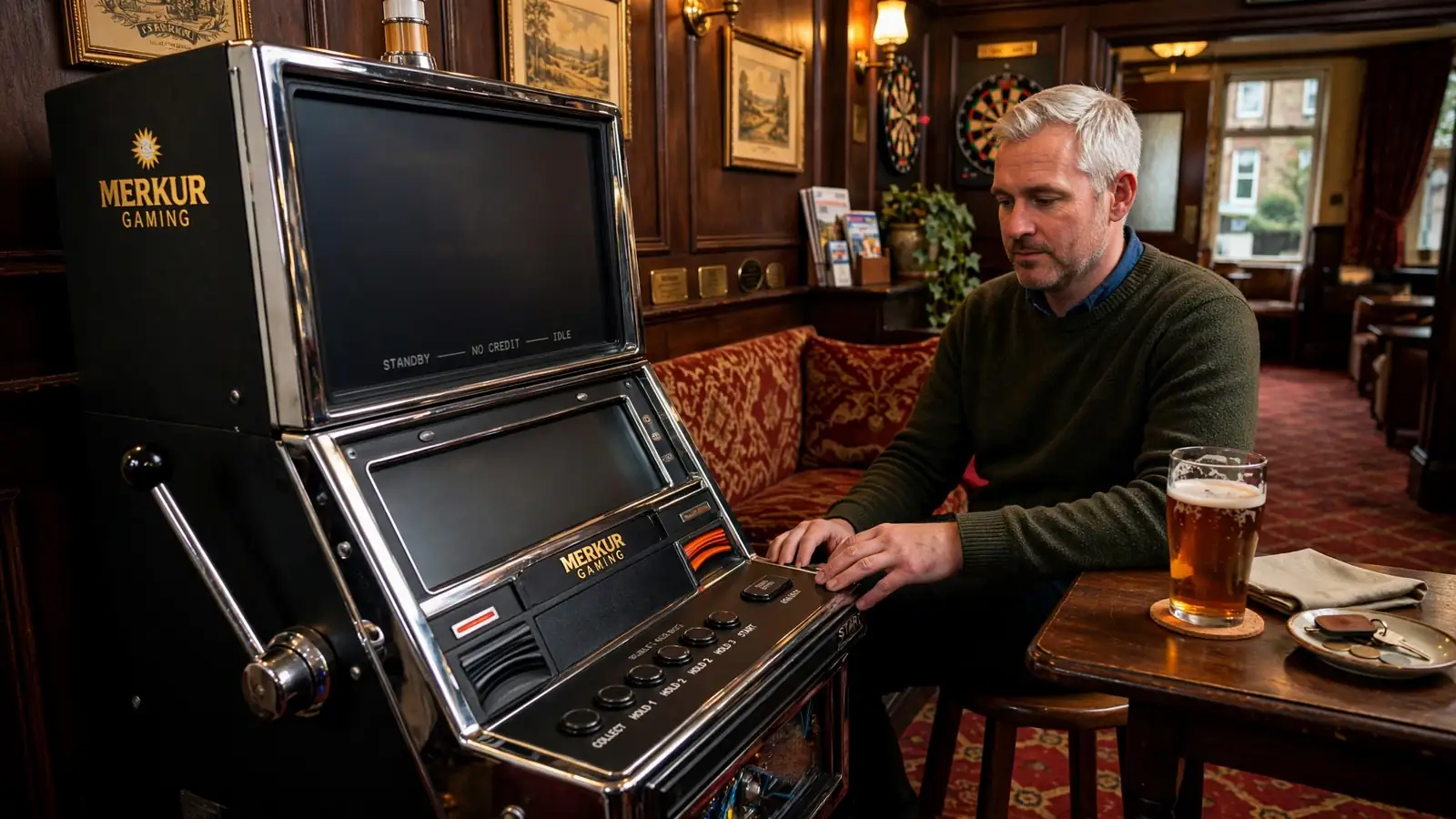
How Slot Machines Fit into Casino Regulation
When people ask how slot machines are regulated online, two different things are often being folded into one: the game on screen and the business offering it for real money. A slot title is not a casino, and its name does not tell anyone whether the site hosting it is authorised to serve customers in Great Britain.
The regulatory question starts with the operator. A business serving customers in Great Britain must hold a UK Gambling Commission licence, wherever that business is based. The licence applies to the operator’s gambling activity; it is not a separate UKGC licence attached to each slot title. A familiar game name, polished interface or prominent provider logo cannot stand in for the operator’s authorisation.
Check Operator Status
- Identify the legal name of the operator
- Verify the operator holds a UKGC licence
- Confirm the licence covers the relevant activity
- Distinguish between the game provider and the operator
That distinction matters because the same title can appear on different sites. One may be offered by a properly licensed operator, another by a non UK regulated casino. The game’s appearance does not change the regulatory status of the site. I have seen marketing make the provider name do a lot of quiet work: it can suggest familiarity and legitimacy, while saying nothing by itself about the operator’s permission to serve the British market.
There are also rules that concern how online slots are played in Britain, rather than which title is on screen. Autoplay is banned, and each spin must last at least two and a half seconds. Stake limits also apply: the maximum per game cycle is £5 for customers aged 25 and over, and £2 for those aged 18 to 24. These requirements concern the regulated British market; they do not turn a game into a licensed operator.
So, are slot machines regulated? For online real-money play, the useful distinction is between regulation of the operator and rules governing the product’s use. A slot’s title or provider is not proof that the site hosting it is covered by UKGC oversight. The operator is the key.
A small distinction. Big consequence.
This is why a list of games cannot answer whether an online casino is regulated. The relevant check is whether the operator holds the licence required to serve customers in Great Britain. A slot can look identical across two sites while the regulatory position behind each one is different. Only the operator-level status settles that question.
Checking an Anjouan Casino Licence Before Trusting It
A licence badge on a casino’s website is a claim, not proof that the named operator holds a valid licence. I would check the operator’s legal name against the Anjouan authority’s public records, then compare the recorded details with the company named in the site’s terms. A mismatch matters: a licence issued to one entity does not establish that another entity running the casino is covered.
The same check should include the licence’s status and expiry date. A logo can remain on a website after the underlying details have changed. If the operator name, domain or licence information cannot be reconciled, the claim remains unverified. That is not a minor paperwork issue.
An Anjouan Casino licence also has a defined boundary. It does not authorise an operator to serve the United Kingdom or other restricted markets. An operator taking customers in Great Britain needs the relevant UK Gambling Commission licence, regardless of where the company is based. For a UKGC casino, verification means checking the operator against the Commission’s official licence register and confirming that the licence covers the relevant activity. A foreign licence is not a substitute.
The practical limits of the Anjouan framework matter as much as the badge. It does not require random-number-generator testing, independent audits or the separation of player funds. Those omissions do not prove that a particular casino has manipulated games or misused balances; they mean the framework does not mandate those checks and protections.
Complaints have a similarly narrow route. The Anjouan authority does not investigate, mediate or decide player disputes. Its framework requires the operator to respond to complaints within 30 calendar days, but a response requirement is not an independent appeal process. There is no equivalent to a UKGC-approved alternative dispute resolution service through the Anjouan authority.
That distinction is easy to miss in polished licensing language. “Licensed” can sound like a broad assurance; in practice, it identifies a framework with specific limits. I would treat a verifiable entry as evidence of the stated licence only—not as proof of UK authorisation, audited games, protected funds or an outside body able to resolve a complaint. A narrow assurance.
GamStop, Player Protection and What Offshore Play Removes
Are non-UK-regulated casinos legal for UK players to use?
UK law targets operators supplying gambling services into the UK, not individual players. Players do not commit a criminal offence by using an unlicensed site, though operators serving customers in Great Britain need a UK Gambling Commission licence.
Are sites that are not on GamStop legal for players in the UK to access?
Players do not commit a criminal offence under UK law by using these sites. Casinos outside GamStop are not part of the UK Gambling Commission’s self-exclusion scheme, and operators serving Great Britain still require a UKGC licence.
What are non-UK-regulated casinos?
They are online gambling sites that operate without oversight from the UK Gambling Commission, often under a licence from another jurisdiction. A foreign licence does not authorise an operator to serve customers in Great Britain.
Is an Anjouan casino licence legitimate?
An Anjouan licence is an authorisation under Anjouan’s framework, but it does not authorise a casino to operate in the United Kingdom. The framework does not require RNG testing, audits or segregated player funds, and it provides no independent dispute-resolution route comparable to UKGC-approved ADR.
How do casinos outside GamStop operate?
They operate outside the UK Gambling Commission’s self-exclusion scheme, typically under a licence from another jurisdiction rather than UKGC oversight. An overseas licence does not remove the requirement for a UKGC licence when serving customers in Great Britain.
Prepared by the Grovers Casino editorial staff.